
Updated on: 2026-08-11
Heritage Palestinian dresses connect daily wear to family memory, regional craft, and handwork traditions. When you understand construction details, textiles, and pattern logic, choosing a dress becomes more confident and more meaningful. This guide separates common myths from practical facts, then walks you through a clear selection process. You will also find answers to frequent questions about fit, fabric care, and styling for modest wardrobes.
Myths vs. Facts
-
Myth: Heritage Palestinian dresses are only for special occasions.
Fact: Many styles are designed for everyday comfort, layered movement, and practical weather adaptation. A heritage-forward wardrobe can include both formal and daily pieces.
-
Myth: The value is only in the outer look.
Fact: Craft value often lives in construction choices such as seam finishing, lining, and the discipline of hand-embroidery. These details improve durability and fit stability.
-
Myth: All embroidery styles are interchangeable.
Fact: Motifs, layout, and stitch density vary by region and context. Pattern placement can change the visual rhythm and meaning of the design.
-
Myth: Fabric selection does not affect authenticity.
Fact: Breathability, drape, and texture influence how garments move. Thoughtful fabric selection supports both comfort and the way embroidery sits on the surface.
Step-by-Step Guide
Choosing heritage Palestinian dresses becomes simpler when you treat the process as a set of design checks. Use the steps below to evaluate style, fabric, fit, and craftsmanship without relying on assumptions.
-
Define your use case. Decide whether you need everyday modest wear, a ceremony-ready option, or a polished outfit for gatherings. Different use cases often require different fabric weights and finishing details.
-
Choose the silhouette that supports movement. Consider how the garment falls at the shoulders and how it moves at the hem. A stable shoulder structure often improves long-term comfort, especially when you layer accessories.
-
Assess the textile and lining. Look for breathable materials that feel comfortable against the skin. If the dress includes a lining or interior finish, confirm that it allows smooth movement and does not create unnecessary bulk.
-
Evaluate embroidery placement and density. Focus on even motif spacing, clean edges, and consistent stitch tension. Hand-embroidery should look intentional, not rushed or irregular.
-
Check neckline and sleeve comfort. A practical neckline supports your styling plan. For sleeves, prioritize balanced shaping that does not restrict arm movement.
-
Confirm sizing for modest layering. Many heritage designs are styled with complementary layers. If you plan to wear an underscarf or a separate modest base, allow adequate room at the shoulders and upper torso.
-
Plan color harmony. Match dress tones with your headscarf and accessories. Choose one main color direction, then add a secondary accent that supports the embroidery palette.
-
Review care needs before committing. Fabric type determines cleaning and storage. If you prefer low-maintenance care, prioritize textiles known for stability and easy handling, and protect embroidered panels during washing.

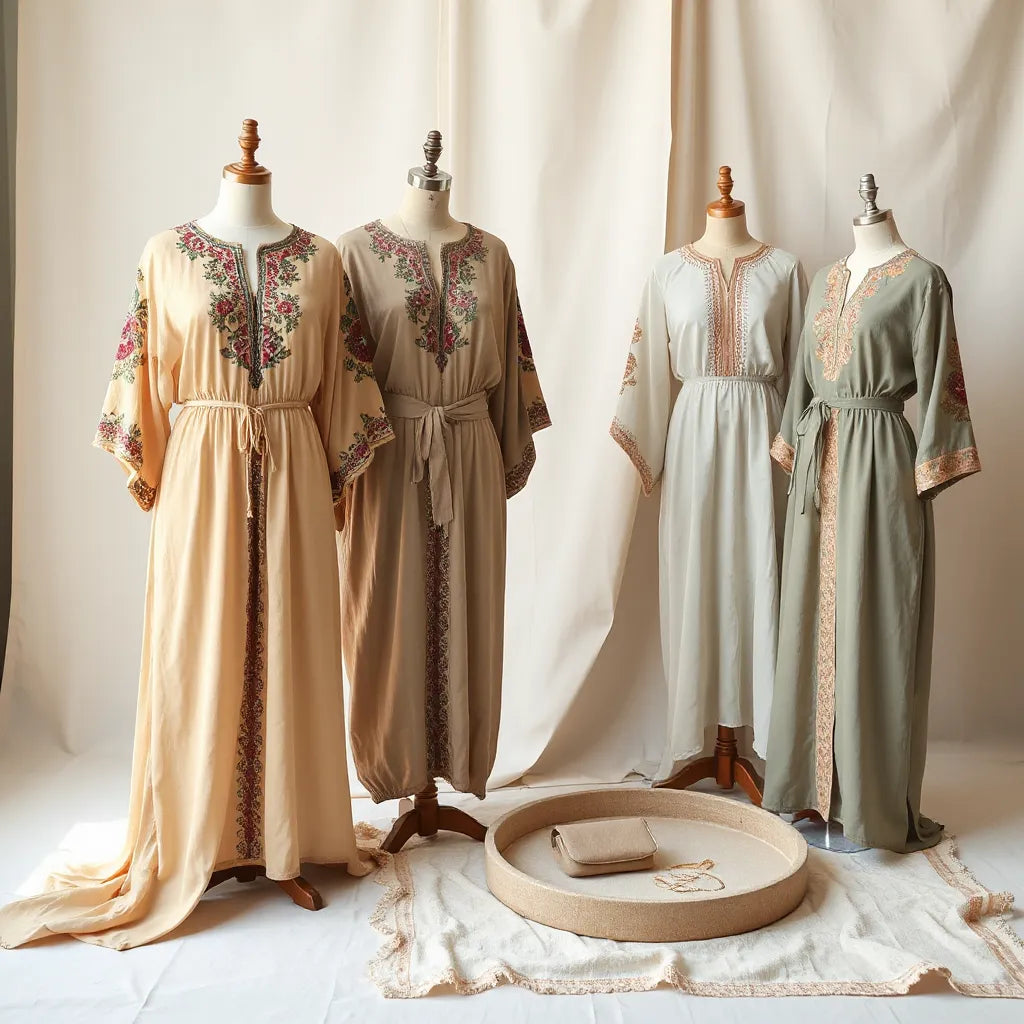
Layers, motifs, and structured seams concept board
How to Style Heritage Palestinian Dresses
Styling is where heritage Palestinian dresses translate from a beautiful garment into a complete, wearable look. The goal is balanced harmony: the dress leads, and the supporting pieces refine the silhouette.
Build a modest base that complements the dress
Start with a base layer that provides comfort and smooth lines. If your dress has detailed embroidery, choose a head covering and under layer with a quieter surface. This approach helps the embroidery remain the focal point. If the dress is more minimal, you can introduce texture through a coordinating headscarf.
If you want a structured modest finish, consider pairing a dress with a refined chiffon option from the collection at Garden heritage chiffon colel. This kind of pairing supports visual continuity between delicate fabric drape and heritage motifs.
Choose headscarf fabrics based on drape and climate
Different fabric finishes behave differently. Lightweight chiffon drapes smoothly and works well for layered styling. Cotton options often feel breathable and offer a classic everyday look. When you select headscarf fabric, aim for one that aligns with the dress fabric’s weight. A mismatch in weight can create uneven bulk or make embroidery look visually disconnected.
For a clean, modest frame, a softly structured bonnet can help keep styling stable throughout the day. If you prefer a streamlined finish under a headscarf, an underscarf bonnet can reduce shifting and supports a neat line.
Use accessories to echo embroidery tones
Heritage dresses often include embroidered accents that carry the color story. Repeat one or two of those tones in accessories such as belts, understated jewelry, or coordinated fabric edges. Avoid over-adding contrasting colors that compete with motif placement.
Refine your outfit with thoughtful outer layers
When the weather requires an extra layer, choose outerwear that preserves the dress silhouette. Long cardigans can soften the line, while tailored outer pieces can emphasize structure. If the dress already includes strong embroidery placement, keep outer layers plain to maintain visual clarity.
Care and Maintenance for Long-Lasting Wear
To preserve the look of heritage Palestinian dresses, care should protect both textiles and embroidered panels. The safest routine is consistent and gentle, with attention to drying and storage.
-
Handle embroidery with care. Turn garments inside out before washing when possible. This reduces friction on exposed stitched areas.
-
Use mild cleaning methods. Choose gentle detergents and avoid harsh scrubbing on embroidered zones. If spot cleaning is sufficient, it often prevents wear from repeated full washes.
-
Dry carefully. Air drying helps protect fabric integrity and embroidery texture. Avoid high heat that can alter shape and cause stress on stitching.
-
Store with structure. Use breathable garment bags and avoid tightly packed storage. For garments with embroidered sections, lay them flat or store them in a way that reduces pressure points.
-
Press with caution. If pressing is needed, press lightly and avoid direct contact with embroidery. Use protective cloth between the iron and delicate surfaces.
When you treat heritage pieces as craft objects rather than everyday textiles, you protect their visual detail and the comfort that makes them wearable. This mindset also supports the broader goal of cultural preservation through responsible consumption.

Gentle care icons for fabric, embroidery, and drying
Frequently Asked Questions
What makes heritage Palestinian dresses different from other modest dresses?
They are defined by craft-led design choices, including intentional motif placement and garment construction that supports comfort and drape. The embroidery and pattern logic create a recognizable visual identity that is more than surface decoration.
How do I choose the right size for layering?
When planning to wear headscarves and modest base layers, prioritize shoulder fit and upper-torso comfort. If the dress feels tight at the shoulders or the neckline sits unevenly, sizing up often improves how the garment moves while maintaining a clean silhouette.
Are heritage dresses suitable for regular use?
Yes. Many styles are designed for repeat wear. With careful washing, gentle drying, and protected storage, embroidery and textile surfaces can remain attractive over time.
Summary & Key Takeaways
Heritage Palestinian dresses offer cultural meaning, refined craftsmanship, and modest comfort in one cohesive look. By focusing on silhouette, fabric behavior, and embroidery quality, you reduce uncertainty and increase long-term satisfaction. Style with intention by matching headscarf drape to dress weight and echoing embroidery tones through accessories. With consistent care and mindful storage, these garments retain their beauty and wearable structure.
If you are building a modest wardrobe that respects craft tradition, consider exploring curated artisan pieces and pairing them with complementary modest foundations from Palestinian Elegance, a family-owned boutique bridging heritage with modern wear.
Q&A Section
How can I tell whether embroidery is truly well-made?
Look for steady motif edges, consistent stitch tension, and balanced spacing. Well-made embroidery usually sits cleanly on the fabric without puckering, and it maintains clarity across panels. When the embroidery lines look intentional and the finishing is tidy, quality is typically higher.
What headscarf style works best with an embroidered dress?
A headscarf with smooth drape usually balances embroidery-forward dresses. If the dress has dense embroidery, choose a headscarf with a quieter texture and fewer competing pattern elements. If the dress is minimal, you can add interest through subtle texture while keeping colors aligned with the dress palette.
What is the safest way to wash garments with heritage-style embroidery?
Use a gentle wash approach and protect embroidered areas by turning the garment inside out when feasible. Mild detergent and careful handling reduce friction. Air drying is generally the most reliable option to maintain shape and preserve stitch integrity.
Can I wear heritage Palestinian dresses across different seasons?
Yes. Textile weight and layering strategy determine seasonal comfort. Lighter fabrics work for warmer days and can be layered with breathable modest pieces. In cooler weather, add a simple outer layer that does not overwhelm the garment line.
How do I avoid common fit problems with long dresses?
Check shoulder comfort and how the garment falls at the hem before styling. If you are wearing a fitted modest base underneath, ensure the dress has enough space at the torso to prevent tension. For height differences, consider adjusting hemming so the visual line remains balanced.
Is it appropriate to wear heritage designs for everyday errands?
Yes, when you prioritize comfort and practical fabric behavior. Choosing a fabric that breathes and a silhouette that supports movement makes everyday wear more attainable. Thoughtful accessories can also keep the look polished without turning it into an overly formal outfit.
Where should I focus if I am shopping on a first purchase?
Start with garment comfort and fabric feel, then verify embroidery and finishing quality. After that, confirm how the dress will pair with your existing modest wardrobe. This sequence improves satisfaction because it aligns with real daily wear needs.
About the Author
Sulieman Alhazma is a fashion and heritage specialist with expertise in modest wardrobe planning and artisan-led design interpretation. With a focus on craft details and practical styling, he helps readers make informed choices that honor tradition and support everyday comfort. He welcomes respectful discussion and encourages thoughtful care routines to extend the life of heritage garments.
The content in this blog post is intended for general information purposes only. It should not be considered as professional, medical, or legal advice. For specific guidance related to your situation, please consult a qualified professional. The store does not assume responsibility for any decisions made based on this information.