Updated on: 2026-08-17
3. How to Choose Elegant Women’s Abayas
4. Fabrics and Finishes That Look Refined
5. Styling for Different Occasions
Elegant women’s abayas are more than a modest clothing choice. They are a statement of presence, craftsmanship, and intention. When an abaya is cut well, made with thoughtful materials, and styled with care, it can feel both comfortable and elevated in daily life. In this guide, you will learn how to evaluate design details, select fabrics with the right drape, and build outfits that look polished without feeling restrictive. You will also find practical care tips that help your abayas maintain their shape, color, and finish for years.
Myths vs. Facts
-
Myth: A refined abaya is only for special events.
Fact: The right silhouette, neutral color, and clean finishing can work beautifully for work, visits, and everyday use. -
Myth: All elegant abayas feel heavy or hot.
Fact: Lightweight weaves and breathable blends can drape gracefully while supporting comfort. -
Myth: Subtle design details are not noticeable.
Fact: Quality finishing, consistent stitching, and balanced embellishment create a clear visual difference. -
Myth: Styling always requires complex layers.
Fact: Thoughtful matching—especially in hijab and inner wear—often delivers a complete look with minimal effort.
Personal Experience
I remember seeing how a single styling choice transformed the way an outfit presented itself. The wearer had selected a calm color, let the cut of her abaya lead the look, and paired it with an inner layer that sat smoothly under the outer fabric. The result was not only flattering but also practical, because the outfit moved easily. That moment clarified a key point: elegant womens abayas are often defined by structure and finishing, not by excessive decoration.

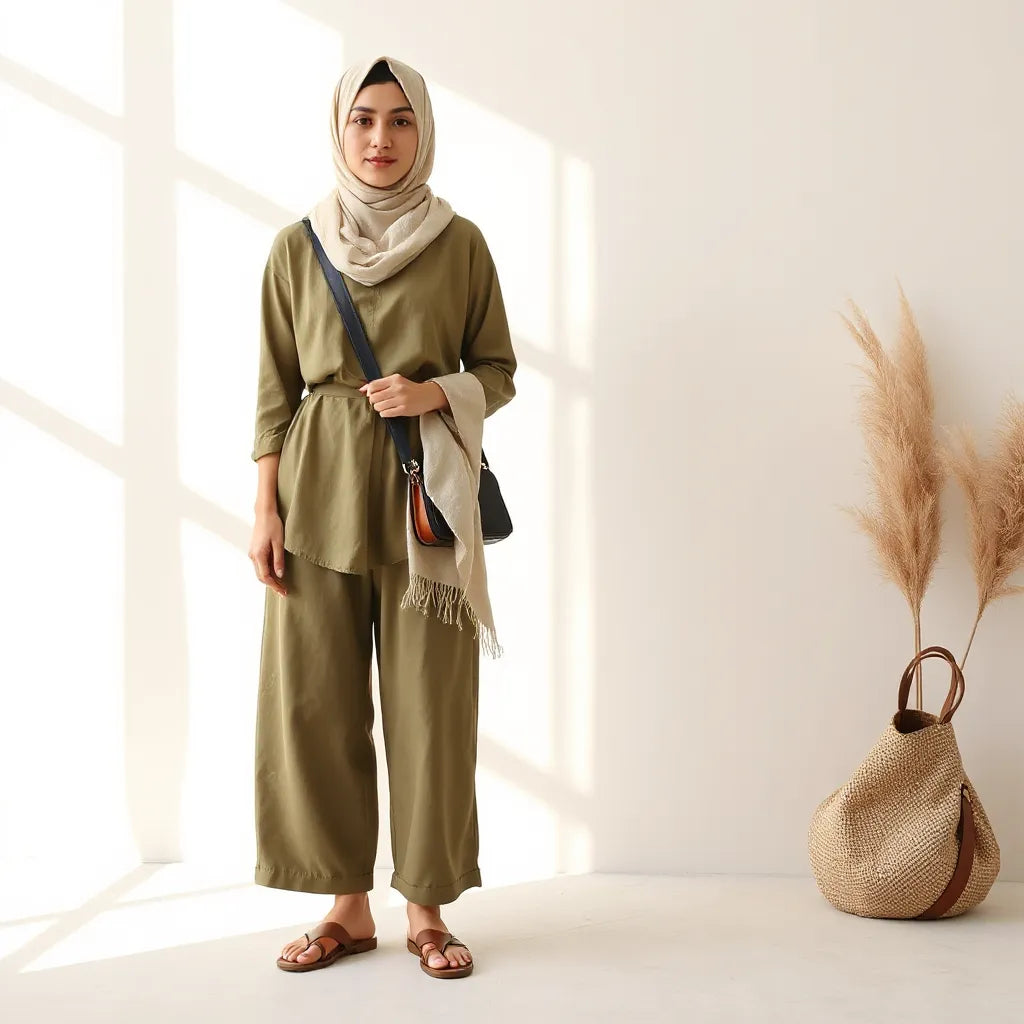
Clean silhouette lines, layered drape, neutral tones
How to Choose Elegant Women’s Abayas
The best way to select an abaya is to assess how it behaves in real life: how it falls, how it moves, and how it sits at key points. Start by focusing on fit and proportions. An abaya should skim the body without pulling at the shoulders or bunching at the sleeves. If it has a defined opening or layered structure, check that the structure remains flat when you walk.
Next, evaluate the neckline and sleeve design. A well-shaped neckline frames the face and supports a neat overall look. For sleeves, consider your comfort priorities. Some styles offer a freer movement through the arm area, while others look more structured through tapering or paneling. Choose what aligns with your daily routine.
Color and finish also matter. Dark shades can look formal, but soft tones can look equally refined when the fabric has a good drape. If you want understated elegance, consider finishes that do not reflect too much light. If you want a brighter presence, select fabrics with a controlled sheen rather than strong gloss.
Plan your outfit in layers
An elegant abaya is rarely a standalone solution. The inner layer influences how the outer garment falls. When the inner fabric is smooth and correctly sized, the outer abaya can maintain its intended line. For hijab styling, the goal is continuity: color coordination, stable shape, and a clean frame around the face.
If you are building a complete modest look, you may find it useful to explore an inner option such as cotton inner hijab for a stable base. A reliable inner layer often reduces shifting and helps the outer layers look intentional.
Fabrics and Finishes That Look Refined
Fabric selection is the clearest indicator of long-term quality. For elegant women’s abayas, the fabric should balance drape and resilience. Drape describes how the material falls when worn. Resilience describes how it holds its shape after movement and repeated use.
Prioritize smooth drape
Look for textiles that fall evenly without stiffness. When fabric has a clean weight, it drapes in a way that feels refined and effortless. If the material is too thin, it may cling or show movement lines. If the fabric is too thick, it can feel restrictive. The goal is a medium balance that supports comfort and consistent appearance.
Check finishing and seams
Even the most beautiful design can look ordinary if finishing is not controlled. Inspect seams for consistent tension and clean stitching. Pay attention to hemming and any decorative edges. Finishing should feel smooth, not rough, and should not twist after washing.

Balanced embellishment, neat hemming, controlled shine
Choose appropriate lining when needed
If your climate tends to feel warm, consider abayas with comfortable inner construction. A lining can reduce cling and support a smoother surface. When your garment behaves well against your inner layers, the full outfit looks more polished.
When styling with hijabs, the same principles apply. Select hijab fabrics that complement the abaya drape, rather than competing with it. For a structured but soft look, chiffon varieties often provide movement without excessive bulk. For example, you can review options like heritage chiffon for a refined, coordinated finish.
Styling for Different Occasions
Elegant womens abayas can be styled for many settings with a consistent approach: anchor the look with a primary color, then choose accents that support the overall mood. Occasion dressing does not require dramatic change. It requires a careful shift in fabric, detailing, and pairing choices.
For daily routine and work
Choose a silhouette that moves easily and looks neat from morning through the end of the day. Neutral tones, clean seams, and medium-weight fabric often support a professional appearance. Pair with a hijab that stays in place, using a base that helps reduce shifting. If you need a practical structure, a prepared hijab option can help maintain a consistent line.
If you want a timeless, effortless profile, consider hijab styles that frame the face and maintain a smooth outline. For example, a structured option like closed bonnet can support a stable fit that works across long days.
For visits and family gatherings
For social settings, you can elevate the look through subtle detailing. Look for abayas with balanced ornamentation, such as restrained embroidery or controlled decorative panels. The goal is to add character while keeping comfort and movement. If the abaya features embellishments near the neckline or sleeves, select hijab colors that harmonize rather than compete.
For formal moments
Formal occasions often call for fabrics that present a stronger visual presence. Choose materials with a controlled sheen or elegant texture. Keep color coordination precise. If you add decorative elements, ensure the distribution feels balanced across the garment rather than concentrated in one area.
In many formal outfits, the hijab fabric plays a major role in the overall impression. Chiffon can bring lightness, while other textures can add structure. Select what matches the abaya’s weight so the outfit remains coherent.
Care and Storage for Long-Term Beauty
Proper care is essential for maintaining the beauty of elegant abayas. Most issues do not start in the moment of wear. They start during cleaning, drying, and storage. When you adopt careful routines, your garments retain their drape, color, and finishing for longer.
Follow fabric-specific cleaning
Read the care guidance attached to the garment before cleaning. Fabric blends can respond differently to heat and detergents. When labels recommend gentle cycles or specific washing methods, follow them closely. If the abaya includes delicate finishing, use a mild detergent and avoid harsh scrubbing.
Dry with shape in mind
To maintain the silhouette, avoid aggressive wringing. Instead, remove excess moisture gently and allow the fabric to dry flat or in a way that supports its intended drape. Excess heat can dull color or weaken fine threads. Air drying often preserves the garment’s finish best.
Store to prevent distortion
Storage affects how an abaya looks when you wear it again. Avoid overcrowding, because tightly packed garments can cause permanent creases. Use garment covers and store in a cool, dry space. If you store multiple layers, place the most structured pieces first and keep delicate finishes protected.
Seasonal routines matter as well. Before putting an abaya away, ensure it is fully dry and clean to prevent odors and trapped moisture. Small care habits can extend the life of the garment significantly.
As you build your wardrobe, you may also enjoy exploring other lifestyle interests. For instance, you can visit Padelstore24 for sports-related gear that suits active routines, especially if you prefer outfits designed for comfort and movement.
Final Thoughts & Takeaways
Elegant women’s abayas come from thoughtful selection. When you evaluate fit, drape, seam quality, and finishing, you are choosing a garment that looks refined and performs well. Styling becomes easier when you plan layers and match textures instead of chasing complicated trends. With careful cleaning and storage, your abayas can remain presentable and beautiful across many seasons.
If you want a reliable starting point, focus on a stable inner base, a hijab that frames the face, and an abaya that falls smoothly with consistent seams. Over time, your wardrobe will reflect your standards and your personal sense of elegance.
Q&A Section
What makes an abaya look elegant rather than plain?
Elegance usually comes from structure and finishing. Look for clean seams, balanced proportions, and fabric that drapes evenly. Even subtle details, such as controlled neckline shape or precise hemming, can create a refined impression.
Which fabric types work best for comfortable all-day wear?
Comfort depends on drape and breathability. Medium-weight materials that fall smoothly typically feel better than overly stiff fabrics. If your climate is warm, consider textiles that reduce cling and allow easy movement.
How do I style an abaya for a formal event without overdoing it?
Choose one clear focus, such as a refined fabric texture or restrained detailing near the neckline. Then keep hijab color harmony and maintain a consistent silhouette. When layers are aligned, the outfit appears elevated without needing heavy styling.
The content in this blog post is intended for general information purposes only. It should not be considered as professional, medical, or legal advice. For specific guidance related to your situation, please consult a qualified professional. The store does not assume responsibility for any decisions made based on this information.