

Updated on: 2026-08-22
Elegant embroidered shawls add refined texture and visible craftsmanship to modest outfits. They elevate everyday layers and also complete formal looks with understated detail. With the right fabric, stitch quality, and styling approach, an embroidered shawl becomes a reliable seasonal staple. This guide explains how to choose, care for, and style them so the embroidery remains expressive and durable.
Choosing Elegant Embroidered Shawls
Detailed Step-by-Step Process for Care
Purpose and Appeal
Elegant embroidered shawls are valued for more than appearance. They serve as a practical layer while adding a crafted focal point that feels intentional. Embroidery creates dimension through thread placement, surface tension, and the way light interacts with raised stitches. When the work is balanced, the shawl visually frames the face and adds structure to silhouettes without overwhelming the outfit.
In modest dressing, a shawl often functions as a style bridge. It can soften the lines of a dress, add contrast to solid colors, and unify separates that otherwise feel mismatched. For formal settings, embroidery offers subtle ceremony. For everyday wear, it provides a polished impression that still feels comfortable and approachable.
Essential Tips
- Match the embroidery scale to the wearer’s frame and the outfit’s pattern intensity.
- Prefer even stitch coverage and consistent thread tension; visible irregularities can signal rushed finishing.
- Choose a fabric base that aligns with your climate and styling habits, such as breathable cotton or lightweight chiffon blends.
- Test drape before purchase by assessing how the fabric falls over shoulders and down the front.
- Plan storage and care early to protect threadwork from snags and moisture.
Choosing Elegant Embroidered Shawls
Selection determines long-term satisfaction. The ideal embroidered shawl should feel harmonious with your wardrobe and remain visually clear over time. Start with three checkpoints: design quality, fabric performance, and finishing details.
1) Evaluate design quality and balance
Embroidery that looks refined usually has clear boundaries and purposeful spacing. Look for motifs that do not blur into the base fabric. The edges of stitched patterns should appear deliberate, and negative space should remain clean. If the design includes borders, assess symmetry. A balanced composition helps the shawl sit naturally when draped and tied.
2) Confirm fabric base and comfort
Embroidery sits on top of a fabric foundation, so the base material affects both comfort and longevity. Lightweight bases often move elegantly and suit warm days. Cotton-like bases can feel sturdy and are generally easier to manage for daily wear. If you often layer over outer garments, choose a fabric that resists excessive wrinkling and maintains drape.
If you are building a coordinated modest wardrobe, consider pairing embroidery-forward pieces with understated inner layers for a smoother overall look. You can explore inner options such as a cotton inner hijab for a refined foundation: cotton inner hijab.
3) Check stitch finishing and thread behavior
Stitch finishing affects how the embroidery ages. Examine the back and side surfaces when possible. Quality embroidery usually has clean thread trimming and minimal loose fibers. Loose ends can catch during wear and washing, leading to fraying. Also note how the embroidery feels; raised work should not be rough enough to distract from comfort around the neck and shoulders.

Close embroidery motifs, clean borders, balanced symmetry
4) Select color strategy for repeated wear
Embroidery can either highlight a color story or disrupt it. For a versatile wardrobe, consider neutral base tones with embroidery that uses complementary shades. This approach allows the shawl to work with more outfits and reduces the need to match exact colors. If you prefer bold contrast, keep the rest of the outfit simple so the embroidery remains the visual center.
For formal or semi-formal occasions, darker bases with lighter threadwork can create a timeless contrast that reads clearly in indoor and outdoor lighting. For daytime settings, softer bases often look calmer and more approachable.
Detailed Step-by-Step Process for Care
Embroidery preserves its impact only when cared for correctly. Threadwork is sensitive to heat, friction, and harsh detergents. The goal is to clean the base fabric without stressing the stitch structure.
Step 1: Air out and inspect after wear
After use, gently air out the shawl to remove mild odors. Then inspect for loose threads or snag points. Addressing small issues early can prevent embroidery from unraveling further.
Step 2: Handle dry cleaning versus washing thoughtfully
Follow care instructions if provided by the maker. If washing is appropriate, use the gentlest method possible. If the shawl has delicate embroidery or a very light base, professional cleaning may be safer for preserving stitch integrity.
When in doubt, test a small area of the base fabric for color stability before full washing. This practice reduces the risk of uneven fading.
Step 3: Use a protective wash method
For at-home washing, place the shawl in a mesh garment bag. This reduces friction from other fabrics. Use cold or cool water and a mild detergent designed for delicate textiles. Avoid aggressive scrubbing, especially directly over embroidered motifs.
If you wear an embroidered shawl for an extended day, sweat and body oils can accumulate at the neck line. Focus on gentle cleaning there, rather than rubbing the embroidery itself.
Step 4: Dry with shape and airflow
Do not wring. Instead, press excess water out by laying the shawl on a clean towel and rolling it gently. Then dry flat in the shade or in a well-ventilated area. Direct sun can fade both the base and the thread tones over time.

Mesh wash bag, gentle drying flat, cool shade
Step 5: Remove wrinkles carefully
Embroidery can be sensitive to high heat. Use a low-heat setting if ironing is necessary and place a thin cloth between the iron and the stitched areas. Steam from a distance can sometimes help without direct pressure on the embroidery.
Styling Methods for Everyday and Formal Wear
Styling determines how the embroidery is perceived. A shawl can either blend into an outfit or become a refined centerpiece. The best method is the one that matches your comfort and the occasion.
Everyday styling: clean lines and subtle contrast
For daily use, aim for a balanced presentation. Drape the shawl so the embroidered area frames the front. Keep the rest of the outfit in solid or lightly textured fabrics to allow the stitching to show its detail. If your clothing has prints, choose a shawl whose embroidery pattern has a similar color range to maintain visual cohesion.
To reduce bulk under the shawl, you can select inner layers that support a smooth neckline. This can help the shawl sit correctly without slipping. For example, an underscarf option such as cotton underscarf bonnet can support comfort during long wear.
Formal styling: controlled drape and intentional framing
In formal settings, the embroidery should read clearly at a distance. Choose a drape that keeps the border or motif area visible when you move. A structured outfit with a well-fitted dress or tailored top often pairs effectively with embroidered shawls.
Consider color harmony between the shawl and the rest of the look. If the shawl has multiple thread colors, select outfit colors that match the most prominent embroidery tone. This approach prevents visual competition and creates a polished finish.
Seasonal adjustments: temperature-aware layering
In cooler weather, embroidered shawls complement layered modest wear. In warmer climates, choose lighter bases that maintain breathability. The embroidery itself can remain the focal detail, while the fabric base handles comfort. When layering, avoid too many thick garments at the neck and shoulders, as this can distort drape and reduce stability.
Occasion-ready pairing with modest wear
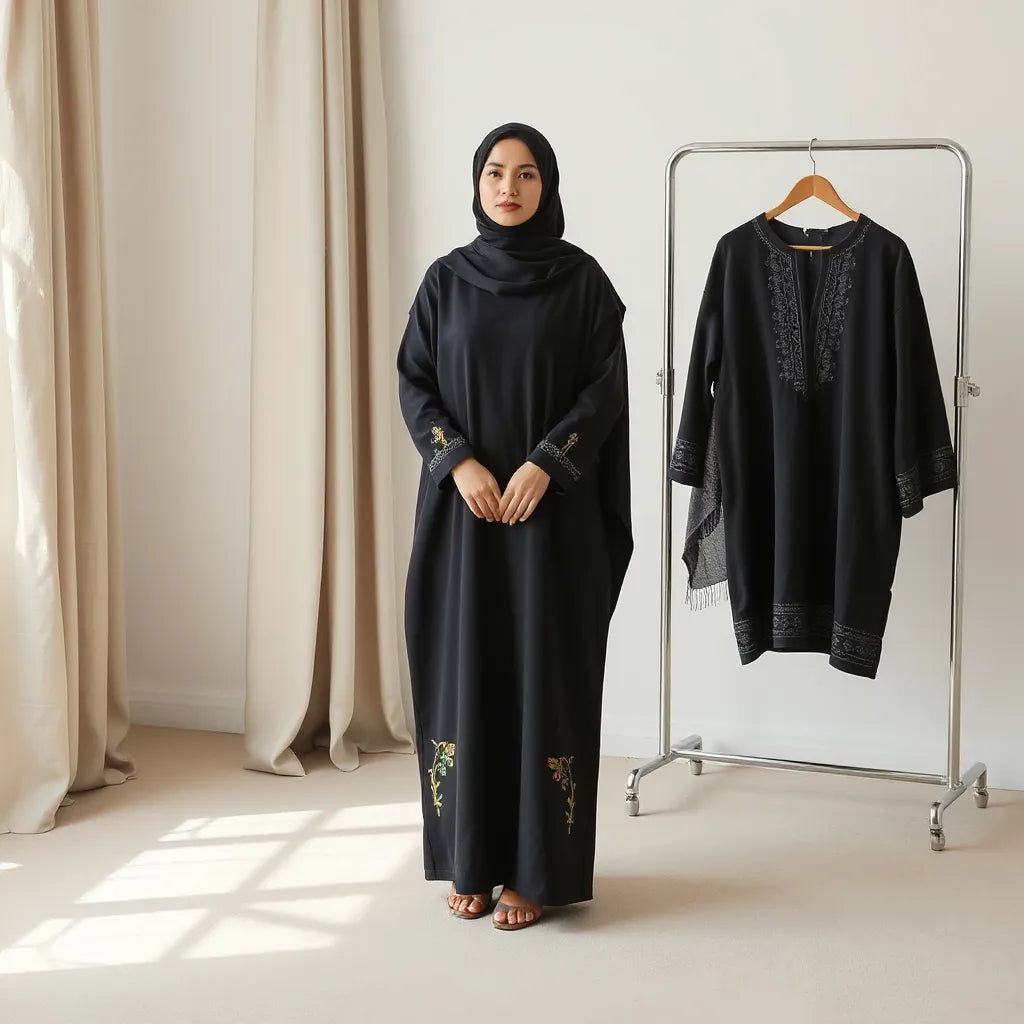
Embroidery can enhance modest silhouettes without changing your dressing principles. When you want a cohesive look, align the shawl with your outer garment structure. For example, pairing with a modest dress or an abaya set in a simple solid color can highlight the embroidery without adding complexity.
If you need inspiration for coordinated modest sets, you may explore an elegant abaya option from Palestinian Elegance: luxury open abaya set kaftan. Coordinating color and texture remains the key to achieving a harmonious finish.
Summary & Takeaway
Elegant embroidered shawls bring artistic craftsmanship into daily dressing. Choose them by evaluating design balance, fabric comfort, and stitch finishing. Protect the embroidery with gentle cleaning, careful drying, and low-heat wrinkle removal. Finally, style with intentional drape: keep everyday looks clean and frame the embroidery for formal moments. With thoughtful selection and care, an embroidered shawl can remain a dependable, elegant piece for years.
Q&A Section
How can I tell whether embroidery quality is high before purchasing?
Look for crisp motif edges, balanced spacing, and even thread tension. When possible, examine the back of the embroidery for clean finishing and minimal loose fibers. The embroidery should feel secure rather than rough or unstable.
What is the safest way to wash an embroidered shawl at home?
Use cold or cool water, a mild detergent for delicate textiles, and a mesh garment bag to reduce friction. Avoid rubbing embroidered areas. Dry flat in the shade or in a well-ventilated space, and do not wring.
Can embroidered shawls be styled with patterned outfits?
Yes. Maintain harmony by using color overlap and keeping the outfit pattern simpler than the embroidery focus. If the outfit has strong prints, choose a shawl with a restrained embroidery layout so the overall look stays balanced.
Why does embroidery sometimes look dull after repeated wear?
Dullness often results from friction, harsh detergents, or direct heat exposure. Protect the shawl by following gentle cleaning practices and avoiding high-temperature ironing directly on stitched areas.
About the Author
Sulieman Alhazma is a fashion-focused contributor with expertise in modest wear styling and textile appreciation, with a particular emphasis on traditional craftsmanship and modern presentation. Their work supports thoughtful wardrobe choices that prioritize quality and cultural detail. They welcome readers to care for embroidered pieces with patience and intention. Thank you for exploring this guide.
Disclaimer: This article provides general guidance on selecting, caring for, and styling embroidered textiles. Always follow the care instructions provided with your specific shawl, as materials and construction may vary.
The content in this blog post is intended for general information purposes only. It should not be considered as professional, medical, or legal advice. For specific guidance related to your situation, please consult a qualified professional. The store does not assume responsibility for any decisions made based on this information.