

Updated on: April 6, 2026
Palestinian embroidered thobes represent a rich cultural heritage combining traditional craftsmanship with contemporary style. This comprehensive guide explores the history, design elements, quality markers, and practical buying considerations for these distinctive garments. Whether you seek authentic pieces or understand their cultural significance, this resource provides essential insights into selecting and caring for embroidered thobes that honor Palestinian artisanal traditions.
Table of Contents
- History and Cultural Significance of Palestinian Embroidered Thobes
- Design Elements and Embroidery Patterns
- Quality Markers and Authenticity Indicators
- Common Mistakes When Purchasing
- Buyer's Checklist
- Frequently Asked Questions
- Wrap-Up and Final Thoughts
- Questions and Answers
History and Cultural Significance of Palestinian Embroidered Thobes
Palestinian embroidered thobes stand as powerful symbols of cultural identity, craftsmanship, and artistic expression. These garments have been worn for generations, with each region of Palestine developing distinctive embroidery patterns and color combinations that reflect local heritage and family traditions. The thobe, also known as a traditional robe or dress, serves as more than clothing; it represents centuries of Palestinian artisanal knowledge passed down through families and communities.
The embroidery techniques used in creating Palestinian thobes require remarkable skill and patience. Craftspeople spend hours meticulously stitching intricate patterns using traditional methods that have remained largely unchanged for decades. These garments often feature geometric designs, floral motifs, and symbolic patterns that hold deep meaning within Palestinian culture. The cross-stitch technique remains the most common method, allowing artisans to create detailed and durable embroidered designs that can last for many years.
Historically, Palestinian embroidered thobes were created for special occasions, including weddings, celebrations, and important family gatherings. Women would invest significant time and resources into crafting or commissioning these pieces, as they served as markers of social status, regional identity, and family heritage. The embroidery patterns often indicated which region a woman came from, making these garments tangible connections to Palestinian geography and community.

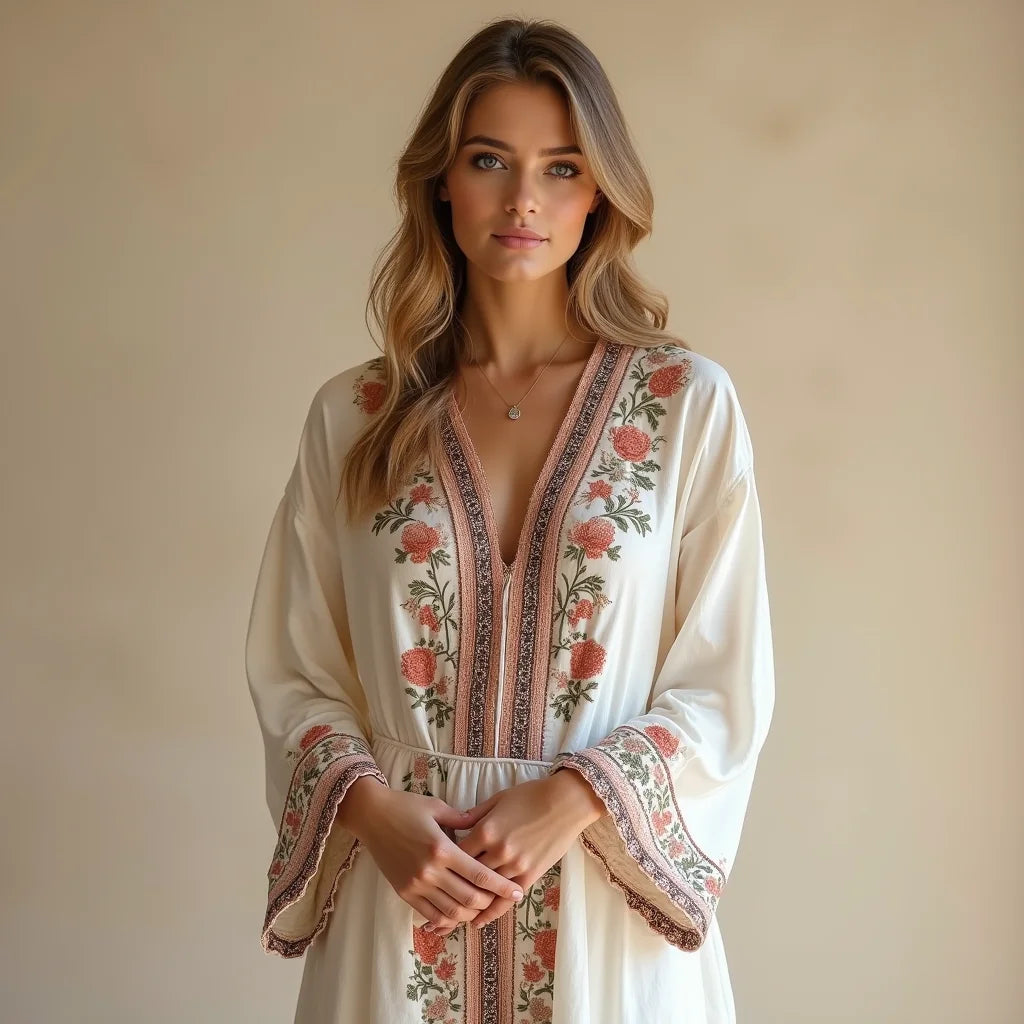
Intricate geometric patterns and regional color schemes representing Palestinian embroidery heritage
Design Elements and Embroidery Patterns
Understanding the design elements of Palestinian embroidered thobes requires knowledge of regional variations and traditional motifs. Different areas throughout Palestine have developed signature patterns that distinguish their local traditions. The Gaza Strip, the West Bank, and historical Palestinian territories each maintain unique embroidery styles that reflect their specific cultural heritage and environmental influences.
Common embroidery patterns include geometric designs featuring diamonds, squares, and triangular shapes arranged in symmetrical formations. Floral motifs depicting stylized flowers, leaves, and botanical elements appear frequently in traditional designs. Many Palestinian thobes also feature symbolic patterns representing Palestinian heritage, such as designs inspired by olive branches, traditional architecture, or geographical landmarks. The color palettes typically incorporate rich jewel tones including deep reds, blues, greens, and blacks, often combined with gold or silver metallic threads for added elegance.
The placement of embroidery on Palestinian thobes follows traditional conventions developed over generations. Embroidery typically covers the front bodice area, chest panels, sleeves, and sometimes the hem. The density and complexity of embroidery varies depending on the garment's intended purpose; everyday thobes feature lighter embroidery while special occasion pieces display more elaborate and densely stitched designs. The combination of embroidery patterns, thread colors, and fabric choices creates distinctive visual signatures that skilled observers can associate with specific regions or families.
Quality Markers and Authenticity Indicators
Identifying quality Palestinian embroidered thobes requires understanding several key authenticity indicators and craftsmanship standards. Genuine pieces demonstrate consistent stitching throughout, with no loose threads or uneven patterns. The embroidery should feel secure and durable, with stitches that will not unravel easily with normal wear. High-quality examples show precise needle work with stitches of uniform size and tension, indicating the embroiderer's skill and experience.
The fabric foundation of a Palestinian thobe significantly impacts its overall quality and longevity. Traditional pieces use natural fibers such as cotton or linen, which provide durability and comfort. The fabric should feel substantial without being overly stiff, allowing the garment to drape elegantly while maintaining its structure. Examine the weave carefully; tightly woven fabrics offer better support for embroidery and greater longevity than loosely constructed materials.
Thread quality represents another crucial authenticity marker. Authentic Palestinian embroidered thobes utilize high-quality embroidery threads that maintain their color and integrity over time. Metallic threads should be securely integrated into the design rather than appearing as surface applications. The color fastness of dyes used in both fabric and threads indicates whether the piece was created using traditional methods and quality materials or mass-produced using inferior components.
Construction methods reveal authentic craftsmanship versus machine-produced alternatives. Hand-embroidered pieces show subtle variations in pattern execution that demonstrate individual artisan work. Seams should be straight, even, and securely finished. The garment's overall structure should reflect traditional construction techniques, with properly finished necklines, sleeves, and hems. Inspect areas where embroidery meets fabric; quality work shows secure integration without puckering or distortion of the base material.

Close examination of authentic hand-stitched embroidery techniques and thread integration
Common Mistakes When Purchasing Palestinian Embroidered Thobes
- Assuming all embroidered thobes are handmade: Modern manufacturing techniques allow machine embroidery to replicate traditional patterns. Verify that pieces are authentically hand-embroidered by examining stitch irregularities and thread work quality.
- Overlooking fabric quality for embroidery prominence: Buyers often focus solely on embroidery patterns while ignoring the base fabric. Poor quality fabric compromises the garment's longevity regardless of embroidery excellence.
- Neglecting color fastness testing: Purchasing without confirming that dyes are colorfast can result in garments that bleed or fade after washing. Ask suppliers about dyeing methods and test small areas before full laundering.
- Ignoring proper sizing and fit: Traditional thobes differ from modern western sizing standards. Purchasing without understanding traditional measurement systems often results in ill-fitting garments that do not flatter the wearer.
- Failing to research regional authenticity: Not all embroidered thobes claiming Palestinian origin feature authentic regional patterns. Educate yourself about specific regional styles to avoid purchasing inauthentic pieces misrepresented as traditional.
- Disregarding care instructions: Embroidered garments require specific washing and storage methods. Ignoring proper care guidelines can damage intricate embroidery and degrade fabric quality over time.
Buyer's Checklist
- Verify embroidery is hand-stitched using traditional cross-stitch or comparable techniques
- Examine thread quality and color consistency throughout the design
- Inspect fabric weave, weight, and feel; confirm natural fiber composition
- Check seams for straightness, even stitching, and secure finishing
- Research regional embroidery patterns to confirm authenticity claims
- Test a hidden area for color fastness before complete laundering
- Confirm garment measurements match your sizing requirements using traditional sizing standards
- Review care instructions provided by the maker or seller
- Request information about the artisan or creator of the piece
- Evaluate pricing relative to craftsmanship quality and material costs
- Consider the intended purpose (everyday wear versus special occasions)
- Assess overall condition of the piece if purchasing vintage or pre-owned items
Frequently Asked Questions
How should I care for my Palestinian embroidered thobe to preserve its quality?
Hand-wash your embroidered thobe in cool water using gentle, natural detergents specifically designed for delicate or embroidered fabrics. Avoid harsh chemicals, bleach, and strong detergents that can damage threads and dyes. Gently agitate the garment by hand rather than using washing machines, which can snag embroidery threads. Rinse thoroughly in clean water until all soap residue is removed. Air-dry the garment flat or hanging in a well-ventilated area away from direct sunlight. Store in a cool, dry location wrapped in acid-free tissue paper to prevent color transfer and moisture damage.
What distinguishes authentic Palestinian embroidered thobes from mass-produced imitations?
Authentic pieces feature hand-embroidered designs with subtle variations indicating individual artisan work. Stitches demonstrate varying depths and slightly irregular spacing that reflects the embroiderer's hand rather than machine precision. Mass-produced alternatives show perfectly uniform stitching, consistent pattern repetition, and often use lower-quality threads that lack the sheen and durability of traditional materials. Examine the back of the garment; authentic hand embroidery shows finished thread work on the reverse side, while machine work may display visible bobbin thread or incomplete backing.
How do I determine the correct size when purchasing a Palestinian embroidered thobe?
Palestinian traditional sizing differs significantly from modern western sizing standards. Request detailed measurements including chest width, sleeve length, and total garment length from the seller. Compare these measurements directly to your own measurements rather than relying on standard size designations. Many sellers provide detailed sizing charts created specifically for traditional garments. Consider that authentic thobes often feature loose, flowing cuts designed for comfort and modesty, so a slightly larger fit is typical and appropriate for these garments.
Can I wear Palestinian embroidered thobes for everyday occasions or are they only for special events?
While traditionally Palestinian embroidered thobes were reserved for celebrations and important gatherings, contemporary fashion allows for more flexible usage. Pieces with lighter embroidery and subtle patterns work well for everyday wear when paired appropriately. More elaborately embroidered garments with dense stitching and prominent metallic threads remain best suited for special occasions, weddings, and formal celebrations. The intended context and formality of your planned occasions should guide your purchasing decisions.
Wrap-Up and Final Thoughts
Palestinian embroidered thobes represent far more than garments; they embody centuries of cultural heritage, artistic tradition, and family legacy. Whether you approach these pieces as a cultural enthusiast, fashion collector, or someone seeking to honor Palestinian heritage, understanding their construction, authenticity markers, and proper care ensures meaningful appreciation and longevity.
When shopping for Palestinian embroidered thobes, prioritize quality craftsmanship over price, verify authenticity through careful inspection, and seek sellers who respect and accurately represent these cultural artifacts. Consider supporting artisans and makers who maintain traditional embroidery methods and contribute to preserving Palestinian textile heritage. With proper knowledge and careful selection, you can invest in authentic pieces that celebrate Palestinian artisanal excellence.
Explore collections that honor traditional craftsmanship by visiting contemporary interpretations of traditional designs that blend heritage with modern styling. For those interested in complementary pieces, coordinating abayas and traditional wear offer excellent options for complete cultural ensembles.
Questions and Answers
What thread materials are traditionally used in Palestinian embroidered thobes?
Traditional Palestinian embroidery utilizes silk threads, cotton embroidery threads, and metallic gold or silver threads depending on regional preferences and the piece's intended formality. Silk threads provide lustrous color and durability, while cotton threads offer practical longevity for everyday pieces. Metallic threads, often wrapped around silk cores, add decorative shimmer to special occasion garments. Quality artisans select thread materials that complement the base fabric and withstand repeated wear and washing.
Are there significant price differences between regions for Palestinian embroidered thobes?
Yes, pricing varies considerably based on region of origin, embroidery density, fabric quality, and the artisan's reputation. Pieces from areas famous for specific embroidery styles may command premium prices due to the recognized excellence of regional craftspeople. More densely embroidered garments with elaborate patterns and metallic thread work typically cost more than pieces featuring lighter embroidery. Handmade pieces created by established artisans command higher prices than mass-produced alternatives, but offer superior quality and authenticity.
How can I support Palestinian artisans and makers when purchasing embroidered thobes?
Purchase directly from artisans, cooperative workshops, or established sellers who transparently document their sourcing and production methods. Support organizations dedicated to preserving Palestinian textile heritage and traditional crafts. Request information about the specific maker and creation story behind each piece. Choose fair-trade options when available, ensuring that artisans receive equitable compensation. By investing in authentic, handmade pieces rather than mass-produced imitations, you directly support Palestinian communities and cultural preservation initiatives.
About the Author
Sulieman Alhazma
Sulieman Alhazma is a cultural heritage specialist and textile expert with extensive experience in Palestinian traditional crafts and embroidery traditions. With years of research into artisanal textile practices and cultural preservation, Sulieman provides authoritative insights into identifying authentic pieces and supporting traditional makers. His passion for Palestinian heritage and commitment to educating buyers about embroidery craftsmanship drives his dedication to sharing knowledge. Through detailed analysis and practical guidance, Sulieman helps enthusiasts and collectors make informed decisions that honor Palestinian artistic excellence.