

Updated on: 2026-10-24
Palestinian wedding attire is more than clothing—it is a feeling of heritage, comfort, and pride on one of the most memorable days of your life. Choosing the right fabric, fit, and finishing details helps you look refined in photos and feel at ease through every moment. With artisan tatreez touches and thoughtful modest silhouettes, you can create a bridal and guest look that feels personal and lasting. This guide walks you through practical styling steps and the best ways to shop with confidence.
Table of Contents
Introduction
When you plan Palestinian wedding attire, you are not just shopping for a look. You are planning how you will move, how you will photograph, and how you will feel when your family and loved ones celebrate you. The right modest outfit can help you feel confident from the first greeting to the last dance, without sacrificing cultural identity.
At our premium brand, we celebrate Palestinian heritage through modern modest fashion. We focus on authentic, artisan-made pieces and hand-embroidered tatreez wear, so your wedding style feels both elegant and meaningful. Whether you are the bride, a close family member, or a guest, this guide helps you choose pieces that fit your day and your values.
How-To Guide: Build Your Palestinian Wedding Attire Look
Use these steps to create a cohesive wedding outfit that looks polished, feels comfortable, and respects the traditions you care about. You can follow them for bridal wear, bridal party styling, or guest outfits.
Step 1: Choose wedding-ready fabrics for comfort
Start with fabric, because your day includes sitting, standing, greeting, and moving. Lightweight fabrics help you stay comfortable in warm venues, while structured textiles help your outfit keep its shape in photos. Look for breathable materials and finishes that fall smoothly without clinging.
If you are wearing an embroidered dress or thobe-style look, choose fabrics that support detailed work and hold a clean line. For layering, pick soft inner pieces that do not shift easily. When you plan the fabric mix, your outfit feels effortless instead of fussy.
Step 2: Pick a modest silhouette that flatters
Next, decide on the silhouette that matches your comfort level. Many brides and guests love flowing shapes because they create graceful movement and a classic feel. A fitted bodice with a relaxed skirt can highlight your figure while still offering coverage you trust.
For family members and guests, a thobe-inspired or dress-style silhouette offers an elegant option that works for photos, prayers, and long celebrations. Prioritize balance: comfortable waist placement, breathable sleeves, and a hemline that you can walk in confidently.

Flowing fabric swatches and soft light for comfort
Step 3: Add tatreez-inspired details thoughtfully
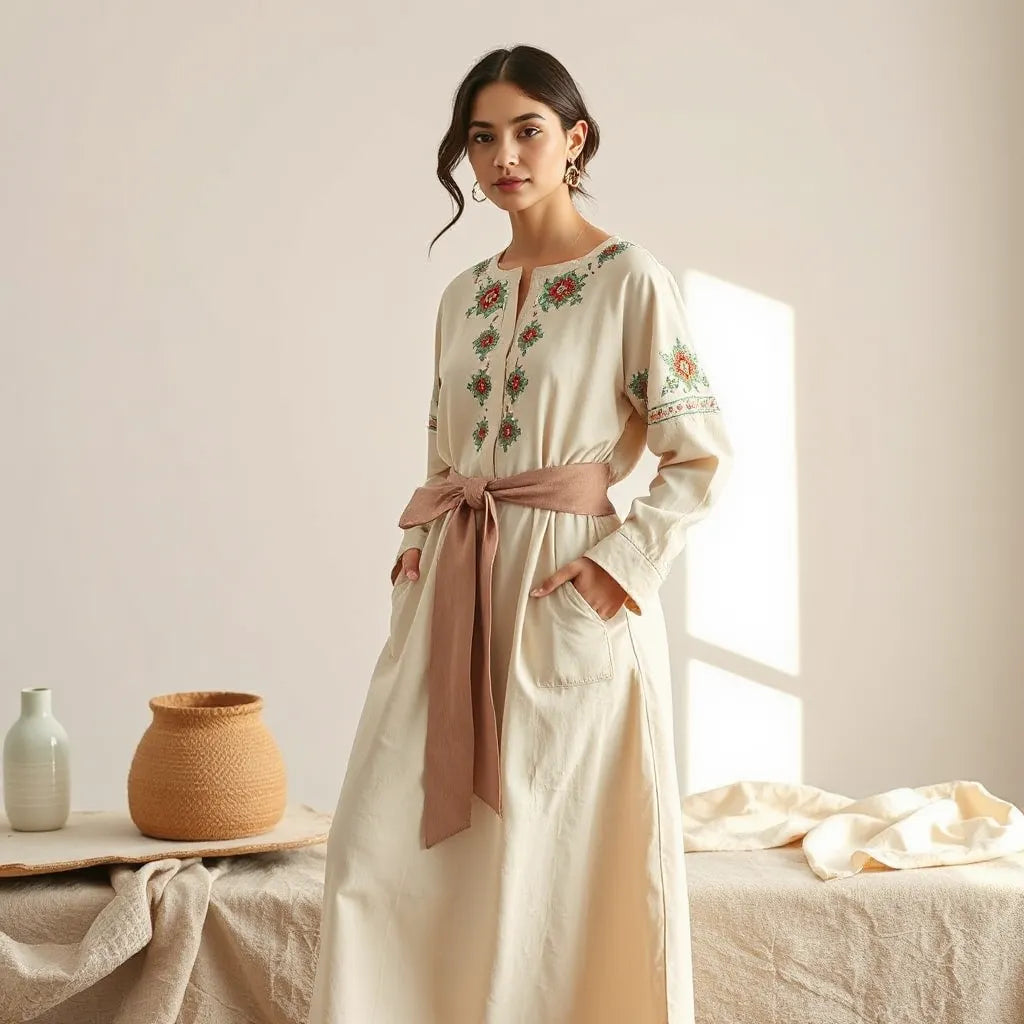
Tatreez is one of the most recognizable ways to express Palestinian heritage through fashion. When you incorporate embroidery-style details, choose placement that supports your overall look. Elegant embroidery panels can frame the torso, add rhythm to sleeves, and bring a focal point to your outfit.
For a modern approach, pair handcrafted accents with simpler sections. That way, the artistry remains the star, while the silhouette stays clean and photo-friendly. If you want a bridal feel, consider embroidery accents in coordinating tones rather than competing colors.
For example, if you love statement embroidery on a dressier piece, explore our artisan options such as Bridal-inspired thobe or embroidered thobe styling. Both directions help you achieve an elevated wedding presence without losing modest comfort.
Step 4: Plan your headwear layers and fit
Headwear is where many people feel the biggest “stress point” before a wedding. You want it secure, flattering, and comfortable enough to wear through hours of celebration. A great hijab setup starts with fit and layering, not only color.
Begin with a base layer that prevents slipping and smooths the neckline. Then choose the outer hijab fabric for drape and shine. Finally, check how the edges frame your face in different lighting—especially if you plan indoor photos with warm lights.
To make styling easier, consider pairing a supportive inner base with a complementary outer. You can shop layered options like cotton under-scarf base and an outer drape such as premium chiffon hijab. This creates a smooth, refined look that feels secure.
Step 5: Coordinate colors for cohesive photos
Choose colors that match your venue and your wedding mood. Soft neutrals photograph beautifully and look timeless across seasons. Warm tones can create a rich, welcoming palette, especially in traditional wedding halls. If you love a bold look, select one hero tone and let the rest of the styling support it.
Keep coordination simple: select one main color for your outfit, one accent for embroidery or detailing, and a hijab shade that complements both. If your outfit includes embroidery with multiple tones, aim for a hijab in the deepest coordinating color for a polished, intentional result.

Color palette board for coordinated wedding styling
Common Questions Answered
What should I prioritize when choosing Palestinian wedding attire?
Prioritize comfort, secure fit, and fabric behavior. Your wedding day includes long standing and plenty of movement, so choose breathable textiles and silhouettes that do not feel restrictive. For photos, select a layout that keeps your outfit smooth and your embroidery details visible. Finally, pick headwear that stays in place and flatters your face in different lighting.
How can I make my bridal look feel modern while honoring tradition?
Modern elegance often means thoughtful simplicity. Choose a refined silhouette and let artisan embroidery or tatreez-inspired details be the focus. Pair detailed pieces with clean lines and coordinated colors. If you love a contemporary feel, consider subtle tone variations, soft drape fabrics, and a hijab setup designed for comfort and movement.
What if I am attending as a guest instead of the bride?
Guest styling can still reflect heritage with a tailored modest look. Choose a dressier thobe-inspired outfit or a flowy dress silhouette with tasteful finishing. Coordinate your headwear to match the outfit tone, and plan footwear and accessories for comfort. If you are unsure, choose a look that feels elegant yet practical enough for the full event.
How do I prevent my hijab from shifting during the celebration?
Start with a stable base layer and use a secure fastening method that feels comfortable for you. Avoid choosing fabrics that are too slippery for your styling approach. Before the event, practice your pinning or tying style and test it while moving—standing, sitting, and greeting. A well-planned layer system makes the difference between constant adjustments and a calm, confident day.
Summary & Next Steps
Choosing Palestinian wedding attire becomes much easier when you plan in a clear order: fabric first, silhouette second, embroidery details third, and headwear fit alongside color coordination. When these choices work together, your look feels harmonious in photos and effortless throughout the event.
If you want a premium, heritage-forward direction, take a look at pieces designed for elegant modest styling, including artisan thobe and embroidered options like strapless bow thobe styling and curated hijab fabrics such as closed bonnet support. Build your wedding look with confidence, and shop with the comfort and craftsmanship you deserve.
Next step: Select your outfit silhouette, then choose one hero color and one coordinated hijab shade. From there, add finishing layers that help everything stay smooth, secure, and photo-ready.
Disclaimer: This article is for styling inspiration only. Product availability and details may change. Always refer to each item’s listing information for size guidance and care instructions.
About the Author
Sulieman Alhazma is a fashion-focused content expert with a strong interest in heritage-led modest styling. He supports readers in choosing pieces that feel confident, culturally appreciative, and comfortable for meaningful occasions. If you are building a wedding look that blends tradition with modern elegance, he encourages you to start with comfort and craftsmanship. Thanks for reading and best wishes on your upcoming celebration.
The content in this blog post is intended for general information purposes only. It should not be considered as professional, medical, or legal advice. For specific guidance related to your situation, please consult a qualified professional. The store does not assume responsibility for any decisions made based on this information.