

Updated on: 2026-05-12
Understanding whose heritage thobe means recognizing how a garment carries family memory, regional craft traditions, and lived style. A thobe is often more than everyday clothing. It can reflect the makers, the materials, and the occasions that shaped the wearer. When you learn what to look for, you make more informed choices and show respect for cultural artistry. This guide explains practical ways to connect heritage details to the right stories.
1. Understanding whose heritage thobe means
2. What to look for in heritage thobe signals
3. Craft and construction clues that reveal origin
4. Occasions and family usage that shape identity
5. How to choose a thobe with meaningful heritage
Whose heritage thobe means: identity, craft, and continuity
Whose heritage thobe is a practical question with cultural weight. A thobe often represents how communities express modest elegance through fabric, stitching, and proportions. Many people first ask this question when they notice differences in collar style, sleeve width, embroidery choices, or fabric drape. Those details are not random. They can reflect regional practice, family preferences, and the skill of local artisans.
To understand whose heritage thobe truly refers to, focus on three layers. First is the wearer’s family and the traditions connected to daily life and celebrations. Second is the craft lineage, meaning the techniques and design knowledge passed through time. Third is the broader cultural context, meaning shared aesthetics across neighboring communities. When these layers align, a thobe becomes a clear marker of continuity rather than a generic garment.
At Palestinian Elegance, the guiding principle is cultural preservation through careful textile choices and respect for artisan methods. Our boutique supports modest wear and artisan-made pieces, including high-quality Tatreez, and we value garments that feel intentional. That same mindset can help you interpret heritage details in a thobe and choose styles that honor the story behind the stitching.
What to look for in heritage thobe signals
When you evaluate a heritage thobe, begin with visible and measurable details. These signals are usually stable across generations, even when styles evolve. They can also help you avoid assumptions based only on appearance.
1) Collar and neckline style
The collar shape can be a strong indicator of traditional preference. Look for a neckline that is structured rather than overly flexible. Note whether the opening sits flat or forms a subtle angle. Small differences can suggest a specific local approach to comfort and modest coverage.
2) Sleeve proportions and cuff finish
Heritage styles often balance movement with neat presentation. Observe how the sleeve falls and whether the cuff has a clean finish. Even when the thobe is simple, the sleeve proportion can indicate how the garment was designed for daily movement.
3) Placket and button placement
The placket and its alignment matter. A consistent button spacing and a straight seam line often reflect careful construction. This can indicate that the garment was produced with attention to fit, not only with decorative intent.
4) Fabric drape and weight
Fabric contributes to the silhouette. A thobe made with suitable fabric will hold shape without appearing rigid. Pay attention to how the fabric drapes when the garment is still. Heritage garments often emphasize calm, even structure.

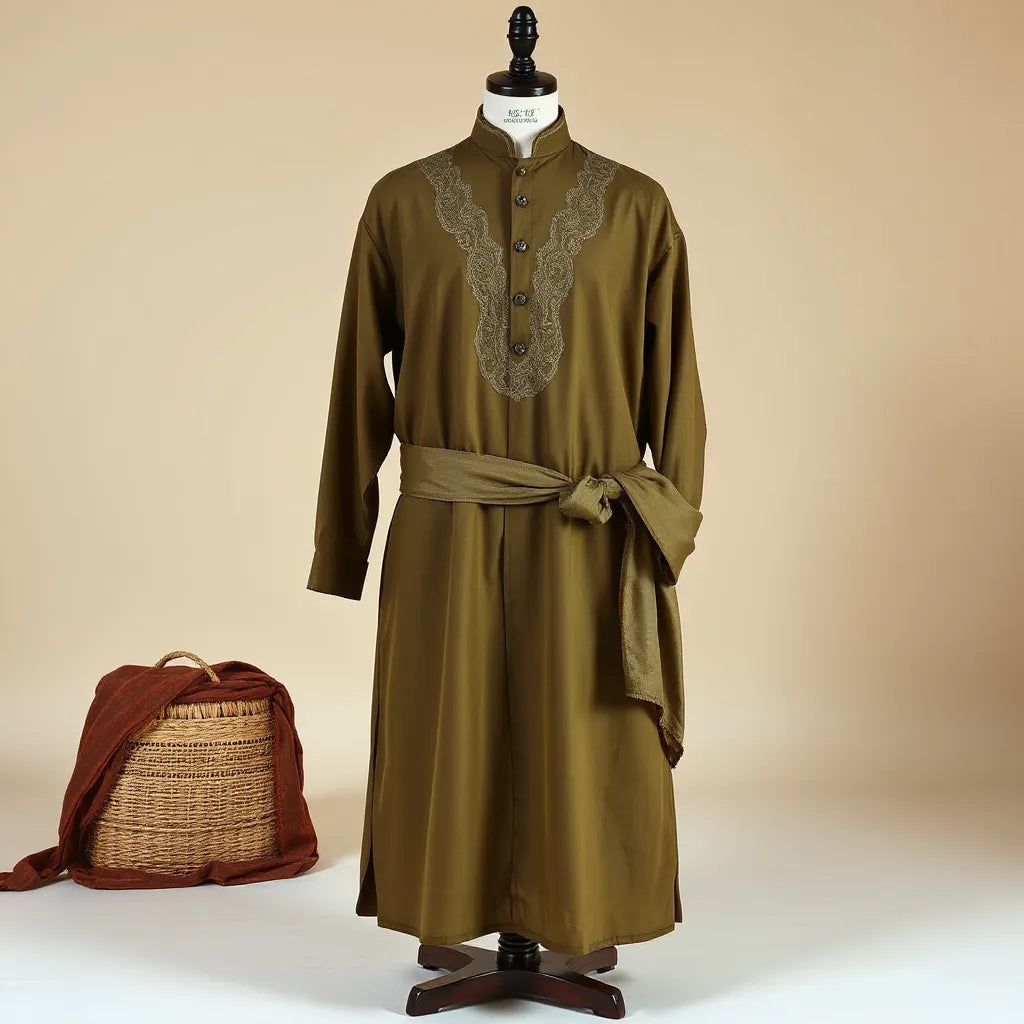
Close-up symbols: collar shape, sleeve cuff, aligned placket
Craft and construction clues that reveal origin
Heritage meaning can be easier to detect when you understand how garments are assembled. Construction speaks clearly. It shows what a maker prioritized: durability, comfort, or ceremonial presentation.
1) Stitch density and seam finishing
Look for seams that are even and securely finished. Dense stitching can indicate a garment built to last through repeated wear. Clean finishing also helps the garment resist fraying and maintain its line.
2) Hem consistency
The hem is often a quiet signature of quality. A heritage thobe usually has a hem that sits straight and stays consistent in width. Uneven hems often suggest rushed finishing or low attention during the final steps.
3) Hand details versus machine uniformity
Some thobes include hand-applied elements. When hand work is present, you may see subtle variation that reflects artisan care. Machine uniformity can still be high quality, but hand details often create a personal signature that connects the garment to craft culture.
4) Embroidery placement and motif logic
If embroidery is present, examine how it is placed. Heritage motifs often follow a logic tied to the neckline, placket, or front panel. This arrangement can reflect what was considered visually balanced and culturally meaningful.
To explore complementary heritage textile artistry, you may also appreciate how Tatreez techniques bring stories to fabric. While a thobe is its own category, embroidery logic and motif balance are shared principles across many modestwear traditions.
If you are styling modest looks in a coordinated wardrobe, consider how inner layers support comfort and presentation. For example, an inner head covering can be an essential foundation when you prioritize neat lines and ease of movement. You can explore options such as cotton inner hijab and adjust coverage based on your preferred aesthetic.
Occasions and family usage that shape identity
Whose heritage thobe is also answered by where it is worn. Many garments carry “purpose memory.” The same style may appear in daily use, yet families often treat ceremonial versions with extra care and special placement of details.
1) Daily wear versus celebration wear
Daily wear thobes commonly emphasize comfort, straightforward maintenance, and practical durability. Celebration wear may include more visible finishing, refined fabric selection, or added decorative elements that photograph well and stand out during formal gatherings.
2) Ownership patterns and continuity
Heritage thobes sometimes become heirlooms. Even when a garment changes owners, it can retain a connection to family stories. If you receive a thobe as a gift or inheritance, treat it as a living record. That perspective helps you interpret design choices as part of a family timeline.
3) Regional climate and seasonal adaptation
Fabric choice and sleeve finishing often respond to local climate. A lighter fabric can feel different in warm months than a heavier textile used in colder seasons. Understanding seasonal use makes heritage meaning more specific and less generalized.
When you consider these usage patterns, the question of whose heritage thobe becomes clearer. It can belong to a family, a region, or a craft circle. In many real-life cases, it becomes shared identity: maker, wearer, and community all contribute to the final story.
How to choose a thobe with meaningful heritage
Choosing a heritage thobe does not require advanced expertise. It requires a structured approach and attention to how the garment is presented, constructed, and maintained. Use the steps below to make a careful decision.
How-To Steps
Start with your purpose. Identify whether you need daily comfort, a formal presentation, or a special occasion statement. Heritage meaning changes by setting.
Evaluate neckline, placket, and seam alignment. Select a thobe where these elements appear consistent and well finished.
Check fabric drape. Choose fabric that falls cleanly and supports the silhouette you prefer. Avoid fabrics that appear overly thin or overly stiff unless that is your intended look.
Look for craft cues. If decorative work is present, assess placement logic and quality. Prefer details that look integrated rather than attached as an afterthought.
Consider coordination with modest layers. A heritage garment often looks most refined when underlayers support neat lines. You can also explore complementary pieces such as a two-piece hijab for coverage planning and silhouette consistency.
Confirm care requirements. Heritage garments usually reward gentle care and consistent storage. Make sure you understand washing, drying, and ironing guidance.
Whose heritage thobe matters most when the garment fits your life and respects the craft it represents. You should feel confident in the choice, not pressured by short-lived trends.

Decision map: neckline check, fabric drape, layered styling
Care and preservation to keep heritage visible
Preservation helps the heritage meaning remain visible over time. When a garment is cared for properly, details stay sharp and the structure remains stable. This is essential for both everyday wear and ceremonial pieces.
1) Wash with fabric awareness
Use appropriate washing methods for the textile type. If embroidery exists, treat it carefully. Gentle cleaning reduces the risk of distortion or fading.
2) Dry and store to prevent creasing
Air drying in a shaded area supports long-term color stability. Store the thobe in a breathable garment space. Avoid harsh compression that can flatten seams and ruin the garment line.
3) Steam or iron with controlled heat
Use moderate heat settings and protect delicate areas. Pressing should support the original silhouette, not reshape it. For garments with decorative elements, apply heat cautiously and test in a less visible area first.
4) Repair early
Small issues can become larger problems when left unattended. If you notice loose stitching, address it early. This practice preserves the craftsmanship and extends usability.
If you are building a modest wardrobe around heritage textiles, you may also care about the quality of supporting garments. For example, head coverings and inner layers benefit from their own preservation habits. You can explore soft, modest options like soft flow chiffon hijab when you want movement and refined layering.
By caring for your clothing thoughtfully, you protect both the appearance and the story embedded in the stitching. That is how heritage remains lived, not archived.
FAQ
What does whose heritage thobe mean in practical terms?
It refers to identifying whose family story, regional style, and craft traditions are reflected in the garment’s design. In practice, you look at construction quality, detail placement, fabric choice, and the intended occasions for the thobe.
How can I tell whether a thobe reflects regional heritage or just generic style?
Look for consistent design logic across key areas such as neckline structure, placket alignment, and hem finishing. Regional heritage is often visible through stable proportions and careful seam work rather than through decorative elements alone.
Does heritage meaning depend only on embroidery?
No. While embroidery can be significant, heritage meaning can also come from fabric drape, collar and sleeve construction, and overall tailoring balance. A simple thobe can still carry strong heritage signals through its build and use patterns.
How should I preserve a thobe to maintain its original look?
Wash gently based on fabric needs, air dry when possible, and store it in a breathable space. Repair small stitching issues early, and use controlled heat when steaming or pressing to protect seam integrity.
Closing Thoughts
Whose heritage thobe is a meaningful question because it helps you move beyond appearance and into understanding. A thobe can reflect family memory, artisan craft, and community continuity. When you evaluate construction details, fabric drape, and intended usage, you make choices that respect the garment’s story. Choose with clarity, care with consistency, and let heritage remain a living part of your wardrobe.
About the Author Section
Sulieman Alhazma is a boutique content writer focused on modest fashion education and cultural textile storytelling. With expertise in heritage-inspired styling and garment interpretation, Sulieman Alhazma supports readers in making informed, respectful wardrobe choices. The approach emphasizes craft signals, construction quality, and practical care guidance. Thank you for reading, and may your next garment choice feel both intentional and meaningful.
Disclaimer: This article is for general educational purposes only. It is not a legal, cultural authority, or identity verification statement. Heritage interpretations can vary by family and region, and readers should use care when assigning origin based on appearance alone.
The content in this blog post is intended for general information purposes only. It should not be considered as professional, medical, or legal advice. For specific guidance related to your situation, please consult a qualified professional. The store does not assume responsibility for any decisions made based on this information.