

Updated on: February 15, 2026
The Palestinian embroidered thob represents a timeless garment rich in cultural heritage and artistic tradition. This comprehensive guide explores the history, craftsmanship, styling techniques, and modern applications of this elegant traditional dress. Discover how to select authentic pieces, care for embroidered details, and incorporate this garment into contemporary wardrobes while honoring its cultural significance.
Table of Contents
- The Cultural Heritage and Historical Significance
- Understanding Traditional Embroidery Techniques
- How to Style and Wear an Embroidered Thob
- Selecting Authentic Pieces
- Care and Maintenance Guidelines
- Frequently Asked Questions
- About the Author
The Cultural Heritage and Historical Significance
The Palestinian embroidered thob stands as one of the most recognizable and valued garments in Middle Eastern fashion history. This traditional dress carries profound cultural meaning, representing generations of artisanal skill, family pride, and regional identity. The embroidered thob serves not merely as clothing but as a tangible connection to ancestral traditions and Palestinian heritage.
Historically, the creation of embroidered Palestinian garments dates back centuries, with each region developing distinct patterns and color combinations that reflect local customs and aesthetic preferences. Women in Palestinian communities traditionally invested significant time in learning embroidery techniques, passing knowledge from mothers to daughters across generations. The intricacy of these designs often indicated family status, regional origin, and artistic achievement within communities.
During various historical periods, the Palestinian embroidered thob became a symbol of cultural resilience and identity. The garment evolved from practical everyday wear to a cherished heirloom piece worn during celebrations, religious observances, and significant life events. Today, the traditional thob remains central to Palestinian cultural expression and continues to gain recognition in global fashion circles as an authentic representation of Middle Eastern artistry.

Intricate cross-stitch patterns showcasing vibrant geometric designs and traditional color palettes
Understanding Traditional Embroidery Techniques
The creation of a Palestinian embroidered thob involves meticulous handwork and specialized knowledge passed through family lineages and community traditions. Skilled artisans employ various embroidery methods to produce the distinctive patterns that characterize authentic pieces. Understanding these techniques provides insight into the value and significance of this garment.
Hand Embroidery Methods
Traditional cross-stitch embroidery forms the foundation of most Palestinian thob designs. Artisans carefully plan patterns on fabric, then execute each stitch by hand using colored threads that create geometric and floral motifs. This labor-intensive process requires precision, steady hands, and years of practiced experience. The cross-stitch method allows for the creation of complex, symmetrical designs that characterize authentic pieces.
Chain stitch and backstitch techniques also appear in many traditional designs, particularly in border work and accent details. These methods provide different visual effects and texture variations compared to cross-stitch work. Experienced embroiderers combine multiple techniques within a single garment, creating depth and visual interest throughout the design.
Material Selection and Thread Quality
The quality of materials used directly impacts the durability and appearance of an embroidered thob. Traditional artisans select high-quality cotton or linen fabric as the base, ensuring the material can withstand the weight of dense embroidery without distorting. The threads employed in embroidery vary in composition, with silk threads providing lustrous finishes and wool threads adding warmth and texture.
Natural dyes historically colored embroidery threads, producing subtle, earthy tones that characterized vintage pieces. Modern production often utilizes synthetic dyes that offer brighter colors and improved colorfastness. The choice between natural and synthetic materials reflects both aesthetic preferences and practical considerations regarding maintenance and longevity.
How to Style and Wear an Embroidered Thob
Step One: Selecting the Right Occasion
Begin by considering the context in which you plan to wear your embroidered thob. Traditional occasions such as weddings, religious celebrations, and family gatherings represent ideal settings for displaying authentic pieces. Modern wearers also embrace these garments for cultural events, fashion exhibitions, and personal expression. Understanding the occasion helps determine which style of thob best suits your needs.
Step Two: Choosing Complementary Accessories
Enhance your embroidered thob ensemble with carefully selected accessories that honor traditional aesthetics. Headscarves in solid colors or subtle patterns coordinate beautifully with intricately embroidered fabrics. Consider premium cotton hijab options that provide comfort and elegance. Jewelry featuring traditional designs, such as coin necklaces or embossed silver pieces, complements the overall presentation authentically.
Step Three: Layering and Fit Considerations
Proper fit ensures both comfort and visual appeal when wearing an embroidered thob. The garment should allow for natural movement while maintaining its elegant silhouette. Many wearers layer traditional pieces with contemporary basics underneath, creating a fusion style that honors heritage while accommodating modern lifestyle needs. Ensure that layered pieces do not obscure the embroidery work, as these details deserve visibility.
Step Four: Footwear Selection
Complete your ensemble with footwear that balances traditional aesthetics with practical comfort. Embroidered slippers, flat sandals, or simple leather shoes work particularly well with formal thob styling. Avoid overly modern or casual footwear that might create visual discord with the traditional garment's elegance.

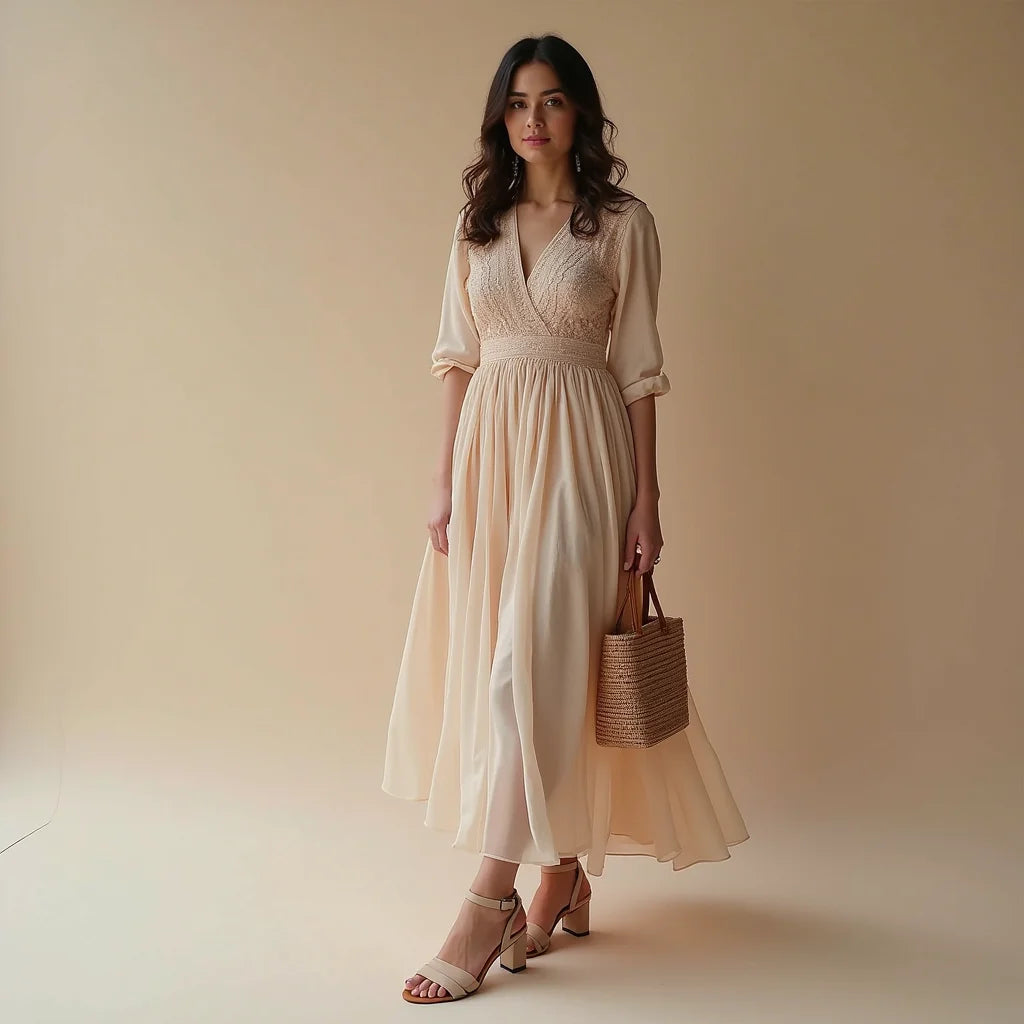
Layered ensemble featuring embroidered dress with coordinating headscarf and traditional jewelry accents
Selecting Authentic Pieces
Acquiring genuine Palestinian embroidered thobs requires knowledge of quality indicators and authenticity markers. Understanding what distinguishes authentic pieces from mass-produced alternatives helps ensure your investment supports traditional artisans and yields a garment worthy of preservation.
Examine embroidery density and consistency across the entire garment surface. Authentic hand-embroidered pieces display slight variations in stitch size and spacing that reflect the handmade nature of the work. Machine-produced imitations often exhibit perfect uniformity that, while appearing precise, lacks the character of traditional work. Run your fingers across the embroidery to feel the raised texture that hand-stitching creates.
Investigate the fabric quality by checking weight, weave, and composition. Traditional Palestinian thobs utilize substantial fabrics that drape elegantly and support embroidery without puckering. Examine seams for neat, even stitching that indicates careful construction. Research the artisan or producer when possible, as reputable craftspeople maintain consistent standards and can provide documentation of their work.
Consider seeking authentic embroidered pieces from established cultural retailers that specialize in Palestinian heritage garments. These sources often provide detailed information about production methods, materials, and regional design origins. Establishing relationships with trusted vendors supports genuine artisans and ensures access to quality pieces.
Care and Maintenance Guidelines
Proper care extends the lifespan of your embroidered thob and preserves its beauty for future generations. These delicate garments require thoughtful handling and specific maintenance practices that protect both fabric and embroidery work.
Hand washing remains the safest cleaning method for embroidered garments. Use cool water with gentle detergent specifically formulated for delicate fabrics. Submerge the garment gently and allow it to soak for several minutes before softly agitating the water. Rinse thoroughly in cool water until all soap residue disappears. Never wring or twist the fabric, as this damages both base material and embroidery threads.
Air drying is essential for preserving the garment's structure and preventing color fading. Lay the thob flat on a clean, dry surface away from direct sunlight. Alternatively, hang it on a padded hanger in a well-ventilated area. Allow several hours for complete drying before storing or wearing.
Storage requires careful attention to prevent damage and deterioration. Clean the garment thoroughly before storage to remove any dust or debris that might accumulate over time. Store in acid-free tissue paper or garment bags that allow air circulation. Keep the garment in a cool, dry location away from direct sunlight, excessive heat, or moisture. Avoid plastic containers that trap humidity and encourage mold growth.
For stubborn stains, consult professional dry cleaners experienced with delicate embroidered textiles. Never attempt harsh chemical treatments or aggressive scrubbing that might damage threads or fabric. Professional care ensures proper handling while preserving the garment's integrity.
Pair your thob with complementary pieces such as elegant chiffon hijabs that enhance your overall presentation while maintaining cultural authenticity. Such combinations create cohesive ensembles that celebrate Palestinian heritage through thoughtful styling.
Featured Product
Explore our collection featuring traditional Camta pieces that complement embroidered thob styling beautifully. These accessories are crafted to enhance your cultural wardrobe with authentic designs and quality materials.

The Camta serves as a versatile accessory that pairs exceptionally well with formal embroidered garments, adding layers of traditional elegance to your ensemble.
Frequently Asked Questions
What is the difference between a Palestinian thob and other Middle Eastern embroidered garments?
Palestinian embroidered thobs feature distinctive regional design patterns, color schemes, and embroidery techniques that reflect Palestinian cultural traditions specifically. While similar garments exist throughout the Middle East, Palestinian pieces incorporate unique motifs and stitching patterns that distinguish them from Syrian, Jordanian, or other regional variations. The specific geometric patterns, floral designs, and color palettes used in Palestinian embroidery carry cultural significance tied directly to Palestinian heritage and regional identity.
How can I determine if an embroidered thob is hand-stitched versus machine-made?
Hand-stitched embroidery displays slight irregularities in stitch size, spacing, and thread tension that reflect the human hand's natural variations. Examine the embroidery closely with good lighting to identify these subtle differences. Machine-made stitching appears perfectly uniform and consistent throughout, lacking the character and depth of handwork. Additionally, authentic hand-embroidered pieces often feel heavier due to denser stitching patterns and superior materials used in traditional production methods.
Can I wear a Palestinian embroidered thob outside of cultural events?
Modern fashion embraces cultural garments as expressions of heritage and personal style beyond formal occasions. Many contemporary wearers incorporate embroidered thobs into everyday outfits, fashion presentations, and creative styling that honors tradition while reflecting individual expression. Consider your comfort level, social context, and personal cultural connection when deciding to wear these meaningful garments in various settings. Wearing traditional pieces with respect and understanding enhances rather than diminishes their cultural significance.
What is the typical cost range for authentic Palestinian embroidered thobs?
Authentic hand-embroidered Palestinian thobs represent significant investments reflecting the extensive labor, skilled craftsmanship, and quality materials involved in their creation. Prices vary considerably based on design complexity, embroidery density, fabric quality, and artisan reputation. Hand-embroidered pieces typically range from moderate to premium price points, while machine-made reproductions cost considerably less. Supporting artisans through purchases of authentic pieces ensures fair compensation for their skills and preserves traditional crafts for future generations.
About the Author
Sulieman Alhazma brings extensive expertise in Palestinian cultural heritage, traditional textiles, and embroidery techniques developed through years of research and community engagement. With deep knowledge of authentic artisan practices and garment construction methods, Sulieman provides authoritative insights into the significance and appreciation of Palestinian embroidered thobs. This guide reflects a commitment to preserving traditional knowledge while making cultural heritage accessible to contemporary audiences interested in authentic Middle Eastern fashion.