

Updated on: 2026-07-02
Traditional Palestinian handicrafts carry skills that have been refined over generations, from careful embroidery to measured weaving and carving. These crafts tell stories through motifs, materials, and workmanship, making each piece both cultural and functional. When you buy handmade items responsibly, you support artisan livelihoods and help preserve heritage techniques. This guide explains what makes these handicrafts distinctive and how to evaluate quality with confidence.
Table of Contents
Why Traditional Palestinian Handicrafts Matter
Traditional Palestinian handicrafts are not simply decorative. They represent craftsmanship, community memory, and practical design shaped by daily life. A single embroidered panel may take steady hours of work, with each stitch placed to create balance, rhythm, and depth. The result is more than an artifact; it is a wearable or usable expression of heritage.
In modern retail, handmade products can be harder to evaluate. Many buyers wonder what they are actually paying for: Is it the fabric? Is it the pattern? Is it the time? In this craft tradition, value is shared across the process. Quality is visible in thread tension, motif alignment, edge finishing, and overall symmetry. Even when two items share similar inspiration, handmade variation is expected and often indicates genuine handiwork.
It is also important to recognize that traditional craft practices preserve cultural knowledge. When artisans produce work using documented techniques, they maintain continuity that cannot be replaced by machine speed. For families and communities, this work can become a stable source of income while reinforcing pride in local identity.
At Palestinian Elegance, the focus remains consistent with heritage values. The boutique bridges traditional Palestinian heritage with modern fashion, emphasizing artisan-made pieces and high-quality craftsmanship. If you want a clear example of careful textile work, you can explore collections that feature traditional embroidery and modestwear design, such as embroidery-focused dresses.
Did You Know?
- Motifs often follow visual rules for spacing, rhythm, and symmetry.
- Hand embroidery can use layered stitch directions to build texture and clarity.
- Traditional patterns may reflect regional influences and local aesthetics.
- Material choice affects how a design ages, including how thread and fabric respond to wear.
Expert Tips for Choosing Quality
When you shop for traditional Palestinian handicrafts, quality assessment should be practical. Use these expert-guided checks to reduce uncertainty and make confident decisions.
- Inspect stitching consistency: Look for even stitch size and stable thread tension across the surface.
- Check motif alignment: Symmetry and balanced spacing are strong indicators of careful layout.
- Evaluate edge finishing: Clean hems, neat seams, and secure borders suggest professional finishing.
- Assess fabric behavior: The cloth should drape naturally without excessive stiffness or visible distortion.
- Ask about technique: Respectfully inquire whether the work is hand-stitched, embroidered, or woven, and whether the pattern is based on established motifs.
If your goal is to wear heritage-inspired embroidery, consider browsing artisan-made modestwear items. For example, you may find refined options at Palestinian Elegance that connect traditional craft with contemporary styling.
The Visual Language Behind Motifs
One reason traditional Palestinian handicrafts remain compelling is that patterns function like visual language. Motifs are arranged to create meaning through structure. Some designs emphasize floral forms, others use geometric compositions, and many combine both for layered contrast.
When you examine a piece closely, you may notice repeating units and purposeful negative space. That negative space is not empty by accident. It highlights the stitched forms and keeps the composition readable. The strongest work tends to preserve crisp motif edges and clear internal detail.
Even if a buyer does not know the historical origin of each motif, the design rules are still visible. Craft traditions value proportion and cohesion. A well-executed motif will appear intentional from a distance, while fine stitching reveals careful planning at close range.
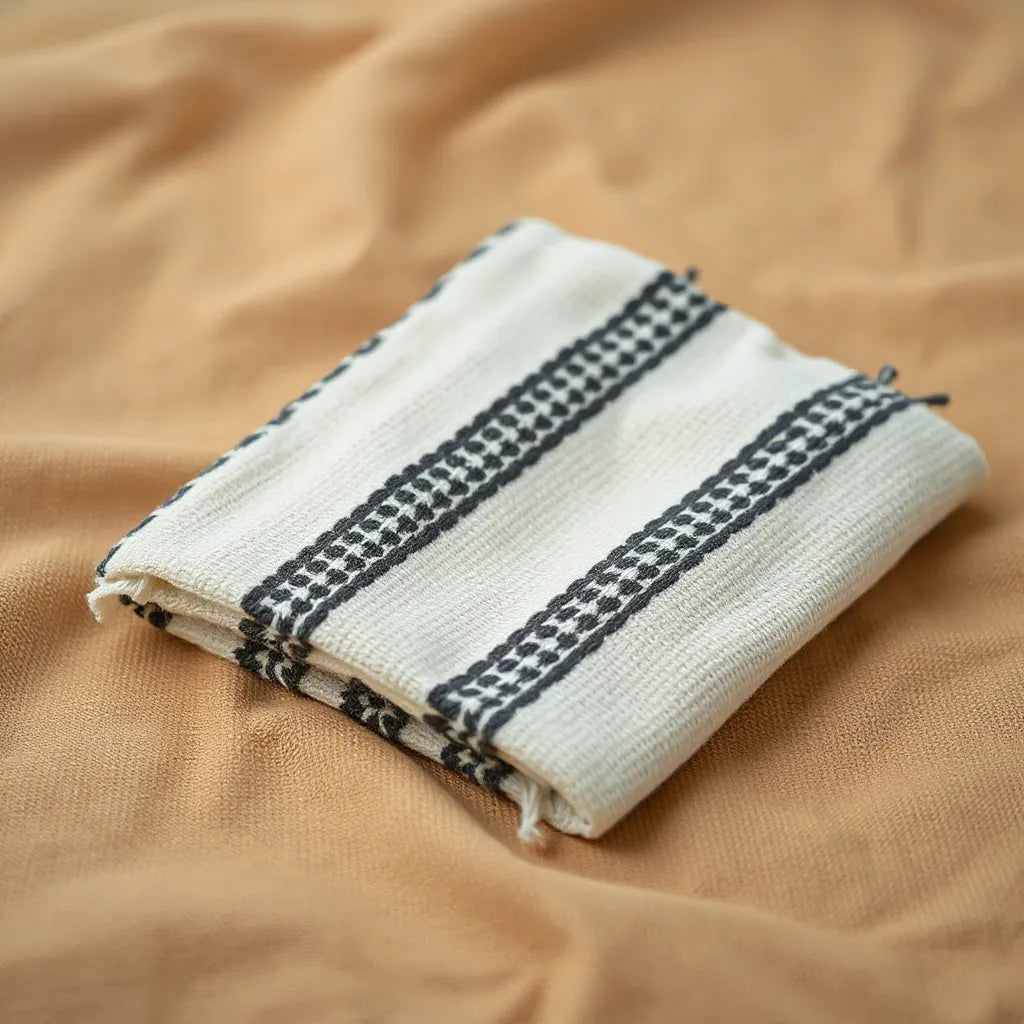
Close motifs, spaced symmetry, and textured embroidery layers
Materials and Techniques That Define Craft
Craft value is expressed through material selection and technique. Thread type, fabric weight, and how the embroidery sits on the base all influence the final appearance. A high-quality piece typically demonstrates stable color and a consistent surface feel.
For many heritage textile practices, threadwork interacts with light. Certain stitches catch light differently than others, which is why experienced artisans often vary stitch direction to create depth. Texture matters, but texture should remain controlled. Ideally, the surface does not appear tangled or irregular; it should look intentionally built.
Fabric choice also determines comfort and wearability. For example, modestwear often needs movement and breathability. Traditional workmanship supports these needs by aligning finishing details with how the garment is worn. A well-made item should maintain its shape during daily use and remain comfortable in normal conditions.
If you want an example of how textile craftsmanship can appear in modern modestwear, you can review product categories that feature embroidered and carefully finished pieces. For instance, explore refined apparel options such as embroidered thobes with heritage detail.
Trust Signals in Handmade Work
Handmade items often carry small differences that reflect real production. However, not every variation is proof of authenticity. Use trust signals that indicate quality process rather than random inconsistency.
- Clear design planning: The pattern should look laid out with a consistent grid or reference, even when the item is individually made.
- Thread security: Backing stitches and knot placement should hold firm without loose ends.
- Balanced density: Embroidery should not feel overly heavy in one section while nearly absent in another, unless the design calls for it.
- Durable finishing: Seams should be straight, and edges should resist curling during normal handling.
- Transparent description: A trustworthy seller explains what is handmade and what is design-inspired, without exaggeration.
It is also wise to consider how the piece will serve your lifestyle. If you want wearability, choose work that aligns with your routine, including the time you are willing to spend on care and storage. Traditional handicrafts can last for years when maintained properly, but materials such as embroidery threads and base fabrics require respectful handling.
Quality checks: neat edges, secure threads, balanced stitch density
Care Practices That Protect Longevity
Proper care supports the durability of traditional Palestinian handicrafts. Since many pieces include embroidered threadwork, care should prioritize gentle cleaning and stable storage. A safe approach helps preserve motif clarity and prevents thread wear.
- Spot cleaning when possible: Treat small marks early to reduce the need for full cleaning.
- Gentle washing methods: Use mild detergent and follow the garment guidance provided by the seller or manufacturer.
- Air drying: Dry away from direct high heat to protect fiber strength.
- Low-heat ironing: Iron on the reverse side when needed, using moderate temperature.
- Storage in breathable conditions: Keep items in a cool, dry area to reduce dust and humidity effects.
Care is also part of ethical ownership. When you maintain craft items correctly, you extend their life and reduce the pressure to replace them quickly. That aligns with the sustainability of handmade production, where the creation process already carries significant time and skilled labor.
For buyers who want heritage-inspired everyday wardrobe pieces, modestwear often benefits from practical fabric choices that hold shape and support comfort. If you are exploring inner layers or headwear that pairs well with embroidered designs, you may also review artisan-focused options such as premium chiffon hijabs and other carefully finished textiles at Palestinian Elegance.
Summary & Takeaways
Traditional Palestinian handicrafts reflect more than design. They represent technique, planning, and cultural continuity through skilled labor. Motifs communicate through proportion and spacing, while materials and stitch structure influence texture, comfort, and longevity. When you evaluate craftsmanship with attention to stitching quality, edge finishing, and transparent descriptions, you make better purchasing decisions.
Actionable takeaways:
- Choose pieces with visible design planning, neat finishing, and secure threadwork.
- Look for balanced motif alignment and consistent stitch tension.
- Follow gentle care practices to protect embroidery threads and base fabric.
- Support sellers and artisans who describe technique clearly and avoid overstatement.
By combining careful inspection with responsible care, you can enjoy heritage craft items that remain meaningful and durable for years.
Q&A Section
What should I look for first when assessing traditional Palestinian handicrafts?
Start with the overall composition. Confirm that motifs appear aligned, spacing is balanced, and edges are finished cleanly. Then inspect stitch consistency and thread security. A well-crafted piece will also feel stable: the fabric should not show distortion, and embroidery should sit evenly rather than unevenly sagging or pulling.
Are variations in handmade pieces a problem?
Variations are normal in handmade production. The key is pattern discipline. Look for intentional design planning rather than random inconsistency. When the differences follow a coherent layout and stitch behavior remains controlled, variation usually reflects artisan execution rather than low-quality construction.
How can I make traditional craft items last longer in daily use?
Use gentle cleaning and avoid harsh heat. Air dry naturally and store items in breathable, dry conditions. Handle embroidery carefully to prevent snagging, and consider spot cleaning when marks are small. Consistent, respectful care protects the clarity of motifs and supports thread durability.
How do I avoid overpaying for work that is not truly handmade?
Seek transparent product descriptions and ask targeted questions about technique. Trust signals include detailed finishing, stable stitching, and clear explanation of what is hand-stitched or design-inspired. If a listing provides limited information and the work shows inconsistent edges or loose thread ends, treat it as a caution and compare with better-documented craftsmanship.
About the Author
Sulieman Alhazma is a heritage and textile specialist focused on how traditional techniques can be preserved while supporting modern, functional design. With expertise in craft evaluation, motif understanding, and responsible sourcing, he helps readers make informed choices. He believes that quality is measurable through workmanship, not marketing language. Sulieman Alhazma extends a friendly invitation to explore artisan-made heritage with both curiosity and discernment.
Disclaimer: This article provides general guidance on evaluating and caring for traditional Palestinian handicrafts. Product details and care instructions vary by item and maker. Readers should follow the specific guidance provided for each purchase and consult reliable information when questions arise.
The content in this blog post is intended for general information purposes only. It should not be considered as professional, medical, or legal advice. For specific guidance related to your situation, please consult a qualified professional. The store does not assume responsibility for any decisions made based on this information.