

Updated on: 2026-07-08
Palestinian cultural attire connects everyday modest dressing with craftsmanship, memory, and regional identity. It highlights thoughtful silhouettes, balanced layering, and textiles that support comfort across seasons. When you understand key elements, you can choose pieces that align with your needs and styling goals. This guide also clears up common misconceptions and provides practical ways to build a respectful, polished look.
Myths vs. Facts
Step-by-Step Guide
Frequently Asked Questions
Summary & Key Takeaways
Q&A Section
About the Author
Myths vs. Facts
Palestinian cultural attire is often simplified in online conversations. Below are common myths, followed by accurate, practical clarifications.
Myth: It is only about tradition for special occasions
Fact: Many elements are worn in daily life. Modest silhouettes, neat layering, and breathable textiles can be used for work, family visits, and events. Craft details can be subtle or statement-level, depending on the setting.
Myth: “One look” fits all Palestinian communities
Fact: Styles vary by region, family customs, and personal preference. You may notice differences in embroidery density, color choices, and how garments are layered. Respectfully acknowledging that variety is part of dressing with cultural care.
Myth: Modesty automatically means sacrificing comfort
Fact: Comfort is achievable with the right construction and fabric behavior. Many traditional and contemporary modest garments prioritize drape, airflow, and ease of movement. Selecting a suitable weave and seam design makes a visible difference.
Myth: Cultural clothing is purely decorative
Fact: Craft is functional as well. Embroidery and textile choices can reinforce visual balance, frame the face, and support cohesive styling. The aesthetics are inseparable from technique and intention.

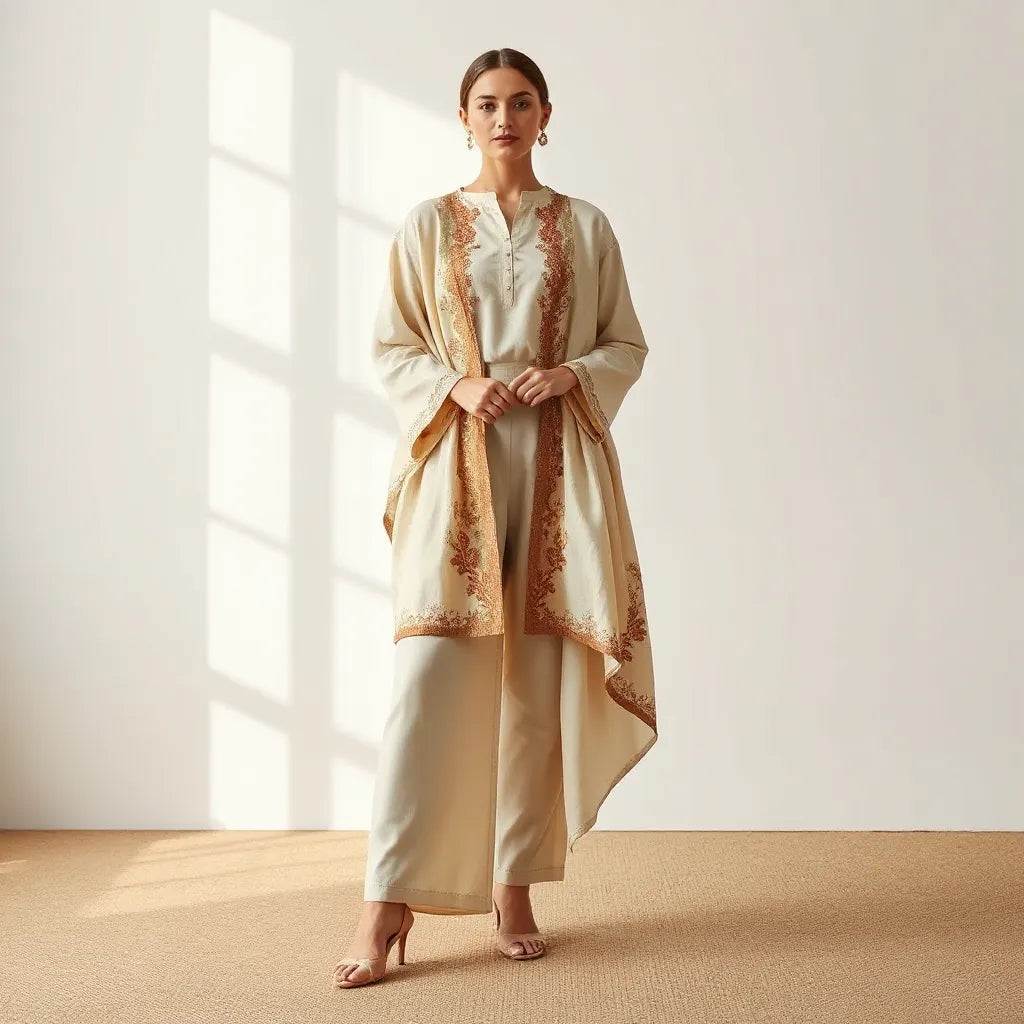
Layered silhouettes and embroidery motifs in harmony
Step-by-Step Guide
If you want Palestinian cultural attire that looks refined and feels wearable, approach it as a styling system. Use these steps to build a look that is respectful, coherent, and comfortable.
-
Start with purpose and context. Decide whether the look is for daily errands, a formal gathering, or a family event. This choice determines how structured or detailed your outfit should be.
-
Choose a modest base with clean lines. Select garments that provide consistent coverage and a flattering shape without tight restriction. A well-fitted base makes embroidery and accessories look intentional rather than crowded.
-
Plan your layering for movement. Cultural attire often uses layered construction. Ensure each layer breathes and drapes smoothly. Avoid stacking fabrics that cling or shift when you walk.
-
Use color to create balance. Classic tones and carefully chosen accents help the outfit feel cohesive. If you select a bold embroidery piece, allow calmer textiles to support it.
-
Integrate craft details thoughtfully. Tatreez-like hand-embroidery and other artisanal finishing bring texture and storytelling to the look. Consider placement: face-framing details, sleeve accents, or hem motifs.
-
Select a head covering that supports the silhouette. The head covering should complement the drape of the outfit. Pay attention to how it frames the face and how it stays secure during the day.
-
Match accessories to the level of detail. Choose one primary focus. If your garment has dense embroidery, keep jewelry restrained. If the outfit is minimal, a slightly more expressive accent can be appropriate.
-
Perform a simple “fit check.” Move your arms, turn your head, and sit. A practical fit check helps you confirm that coverage remains consistent and the outfit feels stable.
How to style Palestinian cultural attire across seasons
Seasonal styling is less about changing identity and more about adjusting fabric behavior. For warmer days, prioritize breathable layers and lighter drapes. For cooler months, add a structured outer layer with comfortable interior airflow. Keep the embroidery visible through thoughtful spacing so the design remains the focal point rather than the fabric weight.
Below is an example of how one category item can support a broader look. Product details are provided for convenience and should be considered alongside your overall styling plan.
Product: Kamta,
Frequently Asked Questions
Quick answers to the questions most customers ask when preparing to wear Palestinian cultural attire with confidence.
What makes Palestinian cultural attire distinct from other modest styles?
Distinctiveness usually comes from regional craft traditions, embroidery placement, and the overall harmony between garment silhouette and textile texture. The result is a look that communicates identity through design details rather than generic modest fashion cues.
How do I choose the right head covering?
Choose a head covering based on drape, coverage, and comfort. Look for construction that stays in place without pulling. Match the color family to your outfit, then ensure the framing around the face is even and neat.
Is it acceptable to wear only one or two traditional elements?
Yes. You can begin with a single craft-forward piece, such as an embroidery-accented garment or a coordinated head covering. Gradually adding more elements helps you build a look that feels authentic to your own routine.
Summary & Key Takeaways
Palestinian cultural attire is a measured blend of modest elegance, regional character, and artisan skill. When you select a strong base, plan balanced layering, and add craft details with intention, the outfit feels cohesive and wearable. Start with comfort and fit, then refine color and texture until the look reflects your style and preserves the design spirit.
If you want guidance on head coverings and modest foundations, explore the collection at Palestinian Elegance for thoughtfully designed pieces created to support everyday elegance.

Color coordination and drape cues for a complete look
Q&A Section
What is the best way to keep Palestinian cultural attire looking polished all day?
Focus on stable construction and practical coverage. Choose layers that do not shift easily, then consider finishing details that hold shape. A consistent fit check before leaving home helps reduce readjustments later.
How should I balance bold embroidery with simpler textiles?
Let embroidery act as the primary visual focal point. Pair it with calmer, smoother fabrics that allow the craft work to stand out. Maintain a consistent color story so the outfit reads as one unified design rather than separate pieces.
How can I learn the symbolism of garments without overgeneralizing?
Use careful observation and credible storytelling from artisans and community sources. Instead of assuming every motif carries a single universal meaning, recognize that design can vary by region and household. The safest approach is to value craft technique, garment harmony, and cultural context rather than forcing broad, fixed interpretations.
For customers building a head-to-toe modest look, the following links may help with coordination and coverage options from Palestinian Elegance:
How do I maintain these textiles so the look stays refined?
Follow care instructions designed for the fabric type. Generally, gentler cleaning cycles, careful drying methods, and proper storage help preserve embroidery texture and drape. When in doubt, treat embroidered items with extra caution so motifs remain crisp over time.
Can modern styling still respect Palestinian cultural attire?
Yes. Respect is shown through thoughtful selection, correct fit, and an understanding of craft value. Modern silhouettes can complement traditional principles when you preserve proportion, maintain modest coverage, and choose textiles that support the overall aesthetic intention.
What should I avoid when assembling an outfit?
Avoid overcrowding the outfit with too many competing statement elements. Also avoid mismatched fabric weights that disrupt drape. Finally, do not treat cultural dress as a trend that can be assembled without regard to craftsmanship and coherence.
About the Author
Sulieman Alhazma
Sulieman Alhazma specializes in cultural wardrobe guidance, with a focus on modest dressing and artisan-informed style. With a practical eye for fit, fabric behavior, and design harmony, Sulieman helps readers translate heritage into confident everyday outfits. This article reflects a respectful approach to Palestinian cultural attire and the values behind it. Thank you for reading and choosing thoughtful fashion.
Disclaimer: This article provides general educational guidance on styling and cultural appreciation. Specific garment traditions may vary by region and personal or family customs. For the most accurate understanding, consult community knowledge and artisan sources connected to the garments you choose.
The content in this blog post is intended for general information purposes only. It should not be considered as professional, medical, or legal advice. For specific guidance related to your situation, please consult a qualified professional. The store does not assume responsibility for any decisions made based on this information.