
Updated on: 2026-07-31
How to Choose Heritage Embroidered Kaftans
Fabric and Embroidery Considerations
Heritage embroidered kaftans: what to look for before buying
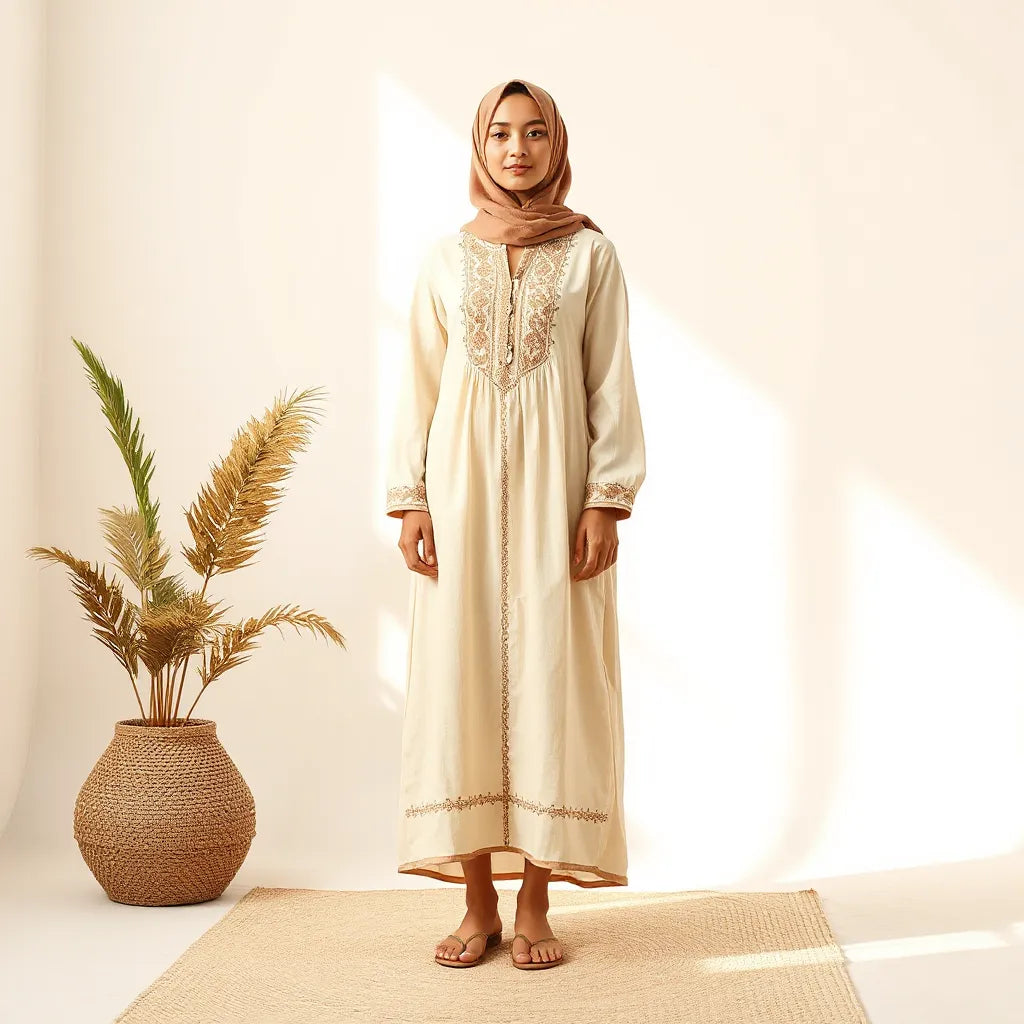
Heritage embroidered kaftans are more than a garment. They are a wearable record of regional motifs, careful stitching, and family craft traditions passed down over generations. When you choose a kaftan with authentic decorative embroidery, you are choosing a design language that communicates identity through pattern, balance, and texture. The best pieces also feel practical to wear, not merely decorative.
To select heritage embroidered kaftans with confidence, start by observing the design structure. Look for motifs that are evenly placed and clearly intended, rather than scattered or overly dense. Next, examine the embroidery quality up close. The threadwork should appear consistent, with stable edges and no obvious loose segments. Finally, consider how the kaftan supports daily movement: the cut, the neckline, and the ease at the shoulders matter as much as the artistry.
If you want a coordinated modest outfit, pair your kaftan with a thoughtfully chosen head covering. For example, you can explore an editorial approach to modest styling by browsing kaftan styles designed for layered looks.

Motif layout sketch and thread texture swatches
Fabric and embroidery considerations
The visual impact of a kaftan comes from two areas working together: the base fabric and the embroidered surface. A well-chosen fabric provides drape and comfort, while the embroidery adds depth and rhythm. When both are proportioned correctly, the result looks refined and feels effortless.
Choose a base fabric that supports the drape you want
Kaftans are often appreciated for their flow. Fabrics such as cotton blends, breathable linens, and premium light weaves tend to move gracefully without feeling stiff. If you prioritize movement, check how the cloth falls when held at the sides. If the drape collapses or looks overly structured, the embroidered panels may become visually heavy.
Assess embroidery density and finish
Embroidery should enhance the garment rather than dominate it. Dense stitching is appropriate for statement motifs, but it should still allow the base fabric to remain comfortable. High-quality threadwork typically shows stable tension and clean finishing around the edges of embroidered shapes.
Confirm the embroidery placement and symmetry
Heritage patterns often follow a deliberate layout. Look for balanced distribution around the chest, sleeves, and hem. Symmetry does not mean identical spacing every time, but it should look intentional. When the design feels “aligned,” the kaftan photographs well and wears neatly.
For buyers who want to understand craft details, it is helpful to learn how embroidery is produced. Modern artisan-making platforms often highlight process and materials, which can clarify what “handcrafted” means in practice. Consider reviewing embroidery-focused product pages on the same site to connect the design you love with the method behind it.

Care tools and protected stitching under soft light
Sizing and styling for comfortable wear
A kaftan can be beautifully embroidered and still fail to feel right if the fit does not support your body movement. The goal is comfort without losing the silhouette that makes kaftans recognizable. Begin with basic sizing, then fine-tune styling choices around neckline and layering.
Look for shoulder ease and sleeve range
Check the shoulder seam placement and the allowance in the sleeve. Heritage-inspired cuts frequently provide generous arm movement. If the embroidery is heavier on the sleeves, sleeve ease becomes even more important, because the stitching can add weight. A well-designed kaftan should move smoothly when you raise your arm.
Neckline and closure options for modest styling
Necklines influence how you pair a head covering and how the garment sits at the collarbone. If you prefer secure coverage, consider styles with a neckline that supports layering. If the kaftan is open, plan the underlayer so the fit stays clean and intentional.
Coordinate with a head covering for a cohesive look
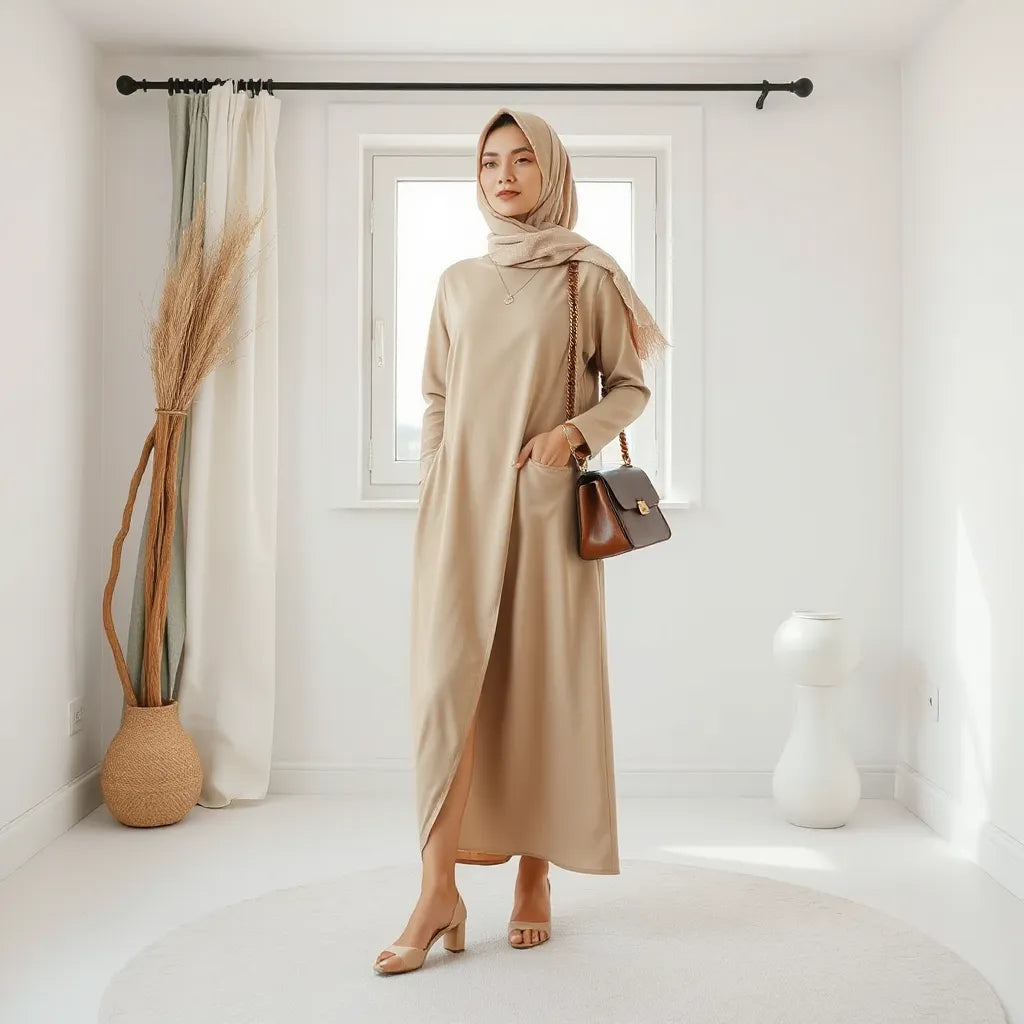
Many wearers choose kaftans as statement outer garments. The head covering should complement the embroidery color palette and avoid competing textures. Neutral undertones allow the kaftan to remain the focal point. If the embroidery uses contrasting threads, choose a head covering that matches either the dominant thread color or the base fabric shade.
When styling for balance, breathable underlayers also improve comfort. If you are building an outfit foundation, you may find it useful to explore modest-hair-covering options such as cotton underlayers that support a stable fit under layers.
Care and longevity: preserving embroidery and fabric
Embroidery is a craft investment. Proper care keeps the stitching crisp and supports the base fabric’s structure. Caring well also helps the kaftan maintain its shape and color over time.
Wash gently or follow the garment’s care instructions
When a care label provides guidance, it should determine your approach. In general, reduce harsh agitation and avoid high heat. If you wash, consider gentle cycles and mild detergents that do not contain strong bleaching agents. For embroidery-heavy pieces, washing less frequently is often beneficial because it prevents repeated stress on the thread.
Dry and store in a way that protects threadwork
Allow garments to dry fully before storage. Damp storage can lead to odors and deterioration. Store kaftans away from strong sunlight, which can fade both base fabric and thread tones. If you fold, do so along natural creases to avoid placing pressure directly on embroidered panels.
Steam carefully, avoid direct heat on stitched areas
Steam can refresh the drape without rubbing. Use careful distance when applying steam near embroidered sections. If the embroidery is raised, prolonged direct heat may affect thread stability. Light, controlled steaming typically preserves the three-dimensional look of heritage embroidery.
Address minor issues before they worsen
Small loose threads may appear over time. If you notice them early, you can prevent larger unraveling. The safest approach is often professional repair for intricate stitched details. For minor issues, a craft-aware tailor can evaluate whether a careful stitch reinforcement is needed.
Did You Know?
- Heritage embroidered kaftans often use motif placement as a visual grammar.
- Thread tension and finishing affect how embroidery looks in motion.
- Base fabric drape changes the way embroidered shapes reflect light.
- Care habits directly influence how long embroidery remains crisp.
- Thoughtful color pairing can make a kaftan feel styled rather than dressed.
Expert Tips
- Inspect embroidery edges for clean finishing and stable threadwork.
- Choose a base fabric that supports the kaftan silhouette you want.
- Prioritize shoulder comfort, especially if sleeves feature prominent stitching.
- Match head covering undertones to the kaftan’s dominant thread color.
- Store garments away from strong light to protect tonal depth.
Personal Anecdote
I remember preparing for a family gathering where I wanted my outfit to feel both personal and respectful of tradition. I focused on the embroidery first, because it carried the stories of craft and patience that drew me in. When I finally wore the kaftan, I noticed how the design settled beautifully as I moved, particularly around the sleeves and hem. The embroidery did not feel like decoration alone; it felt like structure, guiding the silhouette. That experience reinforced an important principle: heritage embroidered kaftans look best when the craft details and the everyday fit are considered together.
Summary & Takeaways
Heritage embroidered kaftans offer a refined way to wear cultural craft through pattern, texture, and intentional design. The most reliable choices begin with embroidery quality, deliberate motif placement, and a base fabric that supports a comfortable drape. Fit matters as much as aesthetics, since shoulder ease and sleeve range influence how the kaftan feels throughout the day. Finally, gentle care and thoughtful storage help preserve thread stability and color depth. If you approach buying with these criteria, you will select a kaftan that remains beautiful and wearable for years.
- Verify embroidery finish, density balance, and intentional symmetry.
- Select a base fabric that complements the desired drape.
- Confirm shoulder and sleeve comfort for real movement.
- Use care practices that protect threadwork and tonal color.
Q&A Section
How can I tell whether heritage embroidered kaftans are made with quality craftsmanship?
Start by examining the embroidery edges and overall tension. Quality craftsmanship typically shows consistent stitching, stable finishing around motif borders, and minimal signs of loose threads. Also review how evenly the motifs are distributed. When the pattern alignment looks intentional and the threadwork feels secure, the craftsmanship is usually reliable.
Are heritage embroidered kaftans suitable for everyday wear, or only special occasions?
They can be suitable for everyday wear, depending on the embroidery density and fabric weight. If the stitching is balanced and the base fabric is breathable, the kaftan can function as a versatile statement piece. Choose a neckline and silhouette that supports layering and comfort, then style with simple accessories that let the embroidery remain the focal point.
What is the best way to pair a kaftan with a head covering?
Pair based on color undertones and texture balance. If the embroidery uses multiple thread colors, match either the dominant thread tone or the base fabric shade. Keep the head covering fabric and decorative elements less busy than the kaftan when you want a clean, cohesive look. If you prefer a fuller statement, coordinate subtle undertones so the outfit feels intentional rather than competing.
How should I wash and store embroidered kaftans to maintain their appearance?
Follow the care label first. In general, use gentle washing methods and avoid harsh heat or strong detergents. Dry fully before storing, and keep the garment out of direct sunlight. When folding, apply pressure lightly and avoid placing heavy weight directly on embroidered areas to reduce thread stress over time.
About the Author
Sulieman Alhazma is an apparel and craft specialist with expertise in modest fashion, artisan embroidery, and heritage-driven garment design. Their work focuses on how traditional stitching methods translate into wearable, contemporary silhouettes. They also support sustainable consumer choices by emphasizing quality indicators such as finishing, drape, and care readiness. Sulieman welcomes thoughtful questions and encourages readers to choose garments that honor craft and remain comfortable in daily life.
Disclaimer: This article provides general guidance on selecting and caring for embroidered garments. Care instructions and performance can vary by fabric composition and construction, so always follow the specific care label on the product. For product details, verify specifications directly on the store page.
The content in this blog post is intended for general information purposes only. It should not be considered as professional, medical, or legal advice. For specific guidance related to your situation, please consult a qualified professional. The store does not assume responsibility for any decisions made based on this information.