

Updated on: 2026-07-15
Palestinian elegance is not only a look; it is a system of styling choices that support comfort, respect, and lasting beauty. In this guide, you will learn how to build refined modest outfits using thoughtful fabric choices, clean silhouettes, and balanced details. You will also find practical care habits to keep embroidery, weaves, and dyed tones looking vibrant. By the end, you will have a clear method for creating outfits that feel polished every day.
- Essential Tips for Palestinian Elegance
- A Detailed Step-by-Step Approach to Refined Modest Style
- Fit, Finish, and Harmony: Where Elegance Is Built
- Care Practices That Protect Craft and Color
- Wardrobe Systems for Consistent, Elevated Outfits
- Q&A Section
Essential Tips for Palestinian Elegance
When people describe Palestinian elegance, they often refer to a calm confidence. It is expressed through proportion, careful layering, and respectful detail. To achieve that effect, focus on repeatable choices rather than temporary trends.
- Choose a refined base fabric: Start with breathable modest layers that hold shape well, especially around the shoulders and neckline.
- Match texture with purpose: Pair smooth surfaces with small structured elements, so the look feels intentional instead of busy.
- Balance coverage and movement: Use layers that move together. When fabric drifts apart, the outfit can look unfinished even if the materials are beautiful.
- Let embroidery lead: If your outfit features hand-embroidery or artisan details, keep other areas visually calm to avoid distraction.
- Maintain color discipline: Work within a palette. Neutrals allow heritage elements to stand out, while coordinated tones create a polished flow.
For a stable foundation, consider a thoughtfully cut inner layer and a hijab fabric that sits neatly without constant readjustment.
If you are updating your everyday modest styling toolkit, you may find useful starting points among these options: cotton inner hijab options and soft flow chiffon hijabs.
A Detailed Step-by-Step Approach to Refined Modest Style
Elegance becomes easier when it follows a process. Use the sequence below to build outfits that look composed in daylight and in indoor settings. This method also reduces last-minute changes.
1) Define the occasion and the mood
Begin by clarifying what the outfit must accomplish. A calm family gathering calls for softness and movement. A formal visit often benefits from structured layers and a tidy finish.
2) Select the anchor layer
The anchor layer is the garment that shapes your silhouette. It should fit cleanly at the shoulders, neck, and waist area. When the base is steady, the hijab and outer layer fall into place with less effort.
3) Coordinate hijab fabric and drape
Choose a hijab that supports the styling direction. Chiffon often creates a light drape with gentle volume. Cotton offers breathability and crispness. For days when you need both comfort and refined movement, a chiffon option can create a smooth, elegant surface.
Many shoppers choose practical layering systems that reduce slipping. You can explore supportive options such as lycra alamera hijab for a secure foundation.

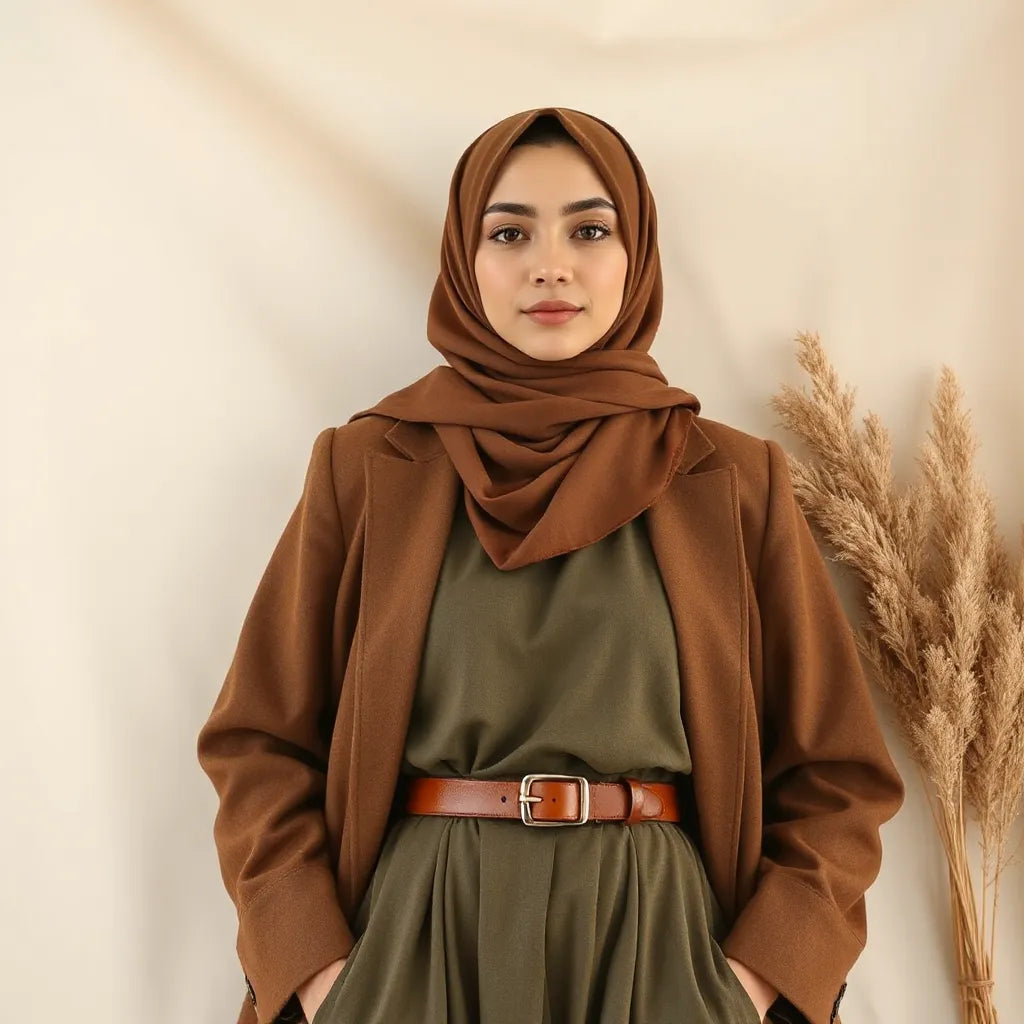
Layered silhouettes, muted palette, and balanced drape lines
4) Plan the color rhythm
Elegance relies on color rhythm. Choose one primary tone, one supporting tone, and one accent for visual interest. If you use an artisan-embroidered element, reduce the number of competing accents.
5) Add detail with restraint
Hand-embroidery, texture panels, and heritage-inspired motifs are best treated as focal points. Place them where the eye naturally travels, then keep the rest of the outfit smooth and consistent.
6) Finish with a clean neck and shoulder line
The final step is refinement. Ensure the hijab frames the face with equal balance on both sides. Check the shoulder line where fabric meets the inner layer. Small adjustments create a high-polish result.
7) Test movement before leaving
Walk gently, sit, and turn your head once. If the fabric pulls, twists, or shifts, fix it now. A polished look is created in motion, not only while standing still.
Fit, Finish, and Harmony: Where Elegance Is Built
True elegance shows in the details that others may not consciously name. It is the way sleeves settle, the way a hijab holds its frame, and the way seams align with your body. A careful fit gives modest outfits their authority.
Silhouette matters more than volume
Many people assume that more fabric automatically equals more elegance. In practice, elegance comes from controlled volume. Too much movement without structure can appear unsteady. Choose outer garments that skim and support rather than cling.
Use modest layering for visual continuity
Layering is not only about coverage; it is also about continuity. When each layer aligns in tone and proportion, the outfit reads as one complete style. When layers conflict, even high-quality fabrics can look disconnected.
Consider bonnet and under-scarf support
Support structures make a visible difference. A well-fitted bonnet or under-scarf reduces shifting and helps maintain a smooth hijab drape from morning until evening. For structured comfort, you may consider cotton under-scarf bonnet options or bonnet styles that help hold shape.
Match edge treatment to fabric behavior
Different fabrics behave differently near the edges. Chiffon may float, while cotton holds a firmer outline. When you pair fabrics, think about how their edges will meet at the neckline and around the face.
If you prefer a neatly framed look, bonnet-based setups often provide a stable foundation. When the base is stable, the hijab can display refined drape rather than constant correction.

Clean neckline alignment, symmetrical framing, and soft shadows
Let artisan details sit in the right space
Artisan embroidery and heritage-inspired motifs deserve breathing room. Avoid stacking too many statement elements. If the garment features embroidery, keep the hijab calm in texture and color, so the craft remains readable.
Care Practices That Protect Craft and Color
Palestinian elegance is also preservation. Craftsmanship requires responsible care so embroidery remains crisp and dyed tones remain true. With consistent methods, your wardrobe can stay elegant across seasons.
Wash with gentleness and consider hand-care for details
When garments include embroidery or complex finishing, use gentle washing practices. Turn pieces inside out before washing. This protects visible embroidery from direct friction. If the item is delicate, hand washing can help maintain texture.
Dry in a way that respects shape
Avoid harsh heat that can deform fibers. Dry garments on a clean surface or hang them carefully so seams set evenly. For hijabs, smoothing while drying reduces wrinkles and helps maintain a refined drape.
Store to prevent stretching and snagging
Folding is often best for embroidered garments to reduce stretching. Store hijabs away from sharp items that can snag the weave. Using fabric-friendly storage helps preserve the softness and structure of each layer.
Refresh color with attention, not shortcuts
Over time, all fabrics can experience fading. To protect color, avoid repeated exposure to intense direct sunlight. If you re-wear a hijab frequently, rotate its placement so the most exposed surfaces do not dull at the same rate.
Iron carefully, using the correct temperature
For many fabric types, steam and moderate heat can help restore a smooth surface. Always test on a small area first. Ironing too hot can flatten texture and reduce the natural elegance of the weave.
By building care into your routine, you protect the aesthetic foundation of every outfit. That is one of the clearest advantages of an artisan-led wardrobe: the look improves with well-maintained fabrics rather than being replaced.
Wardrobe Systems for Consistent, Elevated Outfits
Elegance is easiest when your wardrobe supports quick decisions. Instead of searching for a complete outfit each day, build systems that combine in predictable ways. This approach also helps you stretch your budget through repeated, meaningful wear.
Create a small palette you can reuse
Choose two or three neutral tones and one deeper accent tone. Then build hijab and outer layer combinations that repeat. This reduces decision fatigue and creates a consistent style signature.
Keep a reliable hijab set for each season
For warm days, lighter drape fabrics often work best for comfort. For cooler days, a slightly structured base helps maintain silhouette. Rotate between styles based on fabric behavior rather than seasonal novelty.
Use heritage details as your focal point
If you own artisan-made pieces with hand-embroidery, treat them as focal anchors. Pair them with simple, well-fitting modest layers. The result is a cohesive, elevated look that highlights craft instead of competing with it.
Choose one “go-to” silhouette you trust
Most elegant wardrobes contain at least one reliable silhouette. When that silhouette fits well, you can style it with different hijab tones and subtle texture shifts.
Recommended styling pairings
To streamline your outfit planning, you can use a few consistent components. For example, match a supportive hijab foundation with a refined outer layer style. If you prefer a structured modest abaya feel, a set can simplify decision-making. You can explore: luxury open abaya set kaftan for a layered approach.
Build outfits that feel respectful and comfortable
Comfort is not separate from elegance. When layers fit properly, you can move with ease and keep your posture composed. The result is a look that appears naturally polished.
Q&A Section
How can I achieve Palestinian elegance on busy days?
Focus on a repeatable routine: secure your inner layer first, choose a hijab fabric with consistent drape, and finalize with a clean frame around the face. Use a small palette so color decisions remain quick. Finally, test movement for one minute so the silhouette remains tidy.
What should I prioritize when selecting hijab fabric for an elegant look?
Prioritize drape stability and comfort. Fabrics that sit smoothly near the neckline generally create a more refined appearance. If you want gentle volume without frequent adjustment, select a fabric known for soft flow and consistent texture. Support structures such as bonnets or inner layers can further improve alignment.
How do I keep embroidery and craft details looking fresh over time?
Wash gently, protect embroidery from friction, and dry carefully to preserve shape. Store embroidered pieces folded or in fabric-friendly conditions to prevent snagging. When ironing, use appropriate heat and consider steaming for delicate areas. Consistent care reduces fading and helps maintain the clarity of artisan work.
Can I create an elegant outfit without using many statement elements?
Yes. Elegance often comes from restraint. A well-fitted base silhouette, coordinated tones, and one readable focal detail can create a high-polish look. Keep secondary areas calm in texture so the outfit appears intentional rather than crowded.
Where can I find reliable modest layering ideas?
You can start by reviewing supportive hijab foundations and underlayer options. A stable inner base improves drape, reduces slipping, and makes the entire look appear cleaner. Build from there by adding outer layers that support the silhouette you prefer.
Disclaimer
This article provides general guidance on modest styling and garment care. Results may vary depending on fabric type, garment construction, and individual preferences. Always follow care instructions provided by the product manufacturer and test methods on a small, inconspicuous area when needed.
About the Author
Sulieman Alhazma is a fashion and craftsmanship specialist with expertise in modest wear styling, textile presentation, and heritage-inspired detail planning. With a focus on practical elegance, Sulieman helps readers translate quality materials into confident everyday outfits. Thank you for reading and for choosing thoughtful fashion choices that honor craftsmanship.
The content in this blog post is intended for general information purposes only. It should not be considered as professional, medical, or legal advice. For specific guidance related to your situation, please consult a qualified professional. The store does not assume responsibility for any decisions made based on this information.